
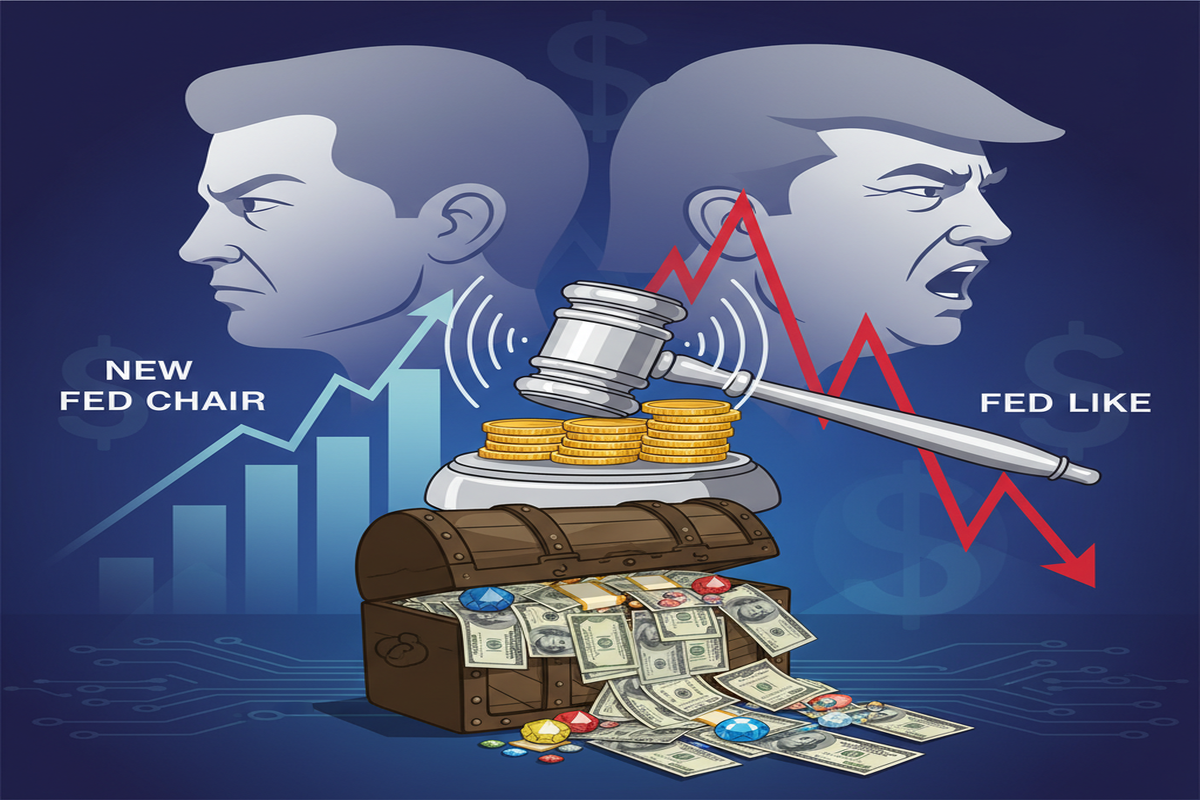
The New Fed Chair Just Said Something Trump Doesn’t Want to Hear
The Federal Reserve just got a new leader. His name is Kevin Warsh. And from day one, he’s signaling that Federal Reserve independence is non-negotiable. That’s a direct problem for a president who wants cheaper money, lower rates, and a roaring stock market. This isn’t just political noise. It directly affects your savings, your mortgage, your investments, and your long-term wealth-building plan. Here’s what you need to know — and how to position yourself smartly right now.
Who Is Kevin Warsh? The New Face of the Fed
Kevin Warsh isn’t a newcomer to the world of central banking. He served on the Federal Reserve’s Board of Governors from 2006 to 2011. That means he was in the room during the 2008 financial crisis — one of the most brutal stress tests any central banker has ever faced.
His Track Record Tells the Real Story
Warsh has long been skeptical of aggressive money printing. He’s pushed back on quantitative easing — the practice of flooding the economy with cheap money to stimulate growth. That stance put him at odds with the Fed majority during the post-crisis era. It also signals where his priorities lie now: protecting the dollar’s long-term value over short-term market gains.
He’s sharp, politically savvy, and willing to take unpopular positions. That’s rare in Washington. It’s also exactly why the global financial community is watching his next policy meeting so closely. The June meeting, in particular, has become a flashpoint.
Key Takeaway: Warsh is not a pushover. His history suggests he’ll prioritize price stability and dollar strength over political pressure — even when that pressure comes directly from the White House.
What Warsh Actually Said — And Why It Stings
Warsh’s core message is blunt: the Fed will do what’s right for the economy, not what’s convenient for the president. That’s not a new idea. But saying it clearly, right now, is a direct challenge to a president who has been very vocal about wanting rate cuts and monetary stimulus.
Trump’s Ask Is Economically Tempting
Trump’s desire for lower rates isn’t irrational. Cheaper money makes borrowing easier. It juices corporate earnings and pushes stock prices higher. Short-term, that looks like a win for everyone. Lower mortgage rates bring relief to homebuyers. Lower credit card rates ease the burden on the average household carrying $6,380 in revolving credit card debt, according to the Federal Reserve’s 2024 consumer credit data.
But “short-term win” is the key phrase. And Warsh knows exactly where that road ends.
The June Meeting Is the Flashpoint
Global investors aren’t just watching the Fed — they’re watching whether Warsh will act as an autonomous economic steward or bend to political will. His response to pressure will send a signal to foreign central banks, bond markets, and sovereign wealth funds that hold trillions in U.S. dollar assets. One misstep here doesn’t just hurt American investors. It rattles global confidence in the dollar as a reserve currency.
Key Takeaway: Warsh is signaling restraint over stimulus. If he holds firm, expect rates to stay higher for longer — which has direct, practical consequences for your debt costs, your savings rate, and your investment returns.
Why Federal Reserve Independence Directly Affects Your Wealth
Federal Reserve independence is the principle that the central bank sets monetary policy based on economic data — not political directives. This isn’t a technicality. It’s the structural foundation that keeps your money from losing value to politically manufactured inflation.
The Historical Warning Signs Are Stark
History doesn’t forgive countries that let politics run their central banks. Turkey is the clearest modern example. President Erdoğan pressured his central bank to cut rates even as inflation climbed. The result was brutal: the Turkish lira lost over 80% of its value between 2018 and 2023, per International Monetary Fund data. Inflation peaked at 85.5% in late 2022. Ordinary citizens watched their savings evaporate in real time.
That’s an extreme case — but the mechanism is identical everywhere. When a central bank prints money or slashes rates to satisfy political goals, inflation rises and currency value erodes. Your savings buy less. Your real wages fall. The wealth gap widens. The people who get hurt most are the ones without hard assets or investment portfolios to hedge against it.
The Fed’s Dual Mandate Complicates Everything
The Fed is legally required to chase two goals: maximum employment and price stability. Those goals often conflict. Right now, unemployment is relatively low. But inflation, while down from its 2022 peak of 9.1%, is still running above the Fed’s 2% long-term target. That makes aggressive rate cuts a hard economic sell — regardless of political pressure.
Key Takeaway: When Fed independence holds, purchasing power is protected. When it erodes, inflation follows — and inflation is the silent tax that destroys real wealth for everyone without assets positioned to keep pace.
Trump’s Growth Agenda vs. The Fed’s Inflation Fight
This conflict between the White House and the Fed isn’t new. Every modern president has wanted cheaper money at some point. What’s different now is the scale of the pressure and the fragility of the fiscal backdrop behind it.
The National Debt Makes This Personal
The U.S. national debt has surpassed $36 trillion. The federal government is running an annual deficit of over $1.8 trillion. In that environment, cutting rates aggressively risks reigniting inflation — especially if the government continues spending at historic levels. More money chasing the same goods means higher prices. That’s not a political opinion. It’s economics.
The 1970s Lesson Nobody Wants to Repeat
The last time a Fed Chair caved to sustained political pressure, Americans paid dearly for it. Under Arthur Burns in the 1970s, the Fed kept rates too low to please the Nixon administration. Inflation climbed to 14.8% by 1980. It took Paul Volcker raising rates to 20% to break it — triggering a painful recession, double-digit unemployment, and years of economic scarring.
Warsh has studied this history closely. He has no interest in repeating it. And that’s exactly what Trump doesn’t want to hear right now.
Key Takeaway: Rate cuts feel good short-term but can destroy purchasing power long-term. The 1970s proved that appeasing political pressure at the Fed leads to generational economic pain. Warsh is betting his reputation that he won’t let that happen again.
What Higher-for-Longer Rates Mean for Your Money
If Warsh holds the line and rates stay elevated, here’s the practical impact on each layer of your wealth stack — broken down clearly and without the jargon.
Layer 1 — Debt and Cash Flow
High interest rates are punishing for variable-rate debt. The average credit card APR hit a record 22.8% in 2024, according to the Consumer Financial Protection Bureau. If you’re carrying a balance, that’s guaranteed money leaving your stack every single month. Your move: kill high-interest debt aggressively and first. Every dollar you pay toward a 22% APR debt is a guaranteed 22% return. No index fund can reliably beat that in the short term.
Layer 2 — Savings and Emergency Fund
Here’s the upside of a high-rate environment. High-yield savings accounts and money market accounts are still paying 4–5% APY at many online banks. That’s a real, risk-free return on your emergency fund — something that didn’t exist at near-zero rates just a few years ago. Park your 3-to-6-month cash cushion in one of these accounts now and let the Fed work in your favor for once.
Layer 3 — Investing and Long-Term Growth
Higher rates create headwinds for growth stocks and rate-sensitive real estate. But they also make bonds more attractive — a useful rebalancing signal. Don’t abandon your long-term strategy over short-term political drama. The S&P 500 has returned an average of 10.5% annually since 1957, per Morningstar research. Consistent index fund investing still wins over time. Don’t let Fed headlines push you into reactive, market-timing decisions you’ll regret.
Key Takeaway: High rates hurt borrowers but reward savers. Use this environment to attack variable-rate debt and lock in strong yields on your cash reserves before rate cuts eventually arrive and those yields disappear.
How to Build a Resilient Wealth Stack Right Now
You can’t control the Fed Chair or the White House. But you can control your debt, your savings rate, and your income sources. Here’s a clear four-step action plan.
Step 1: Map Your Variable-Rate Exposure
List every debt tied to a variable interest rate. Credit cards, HELOCs, adjustable-rate mortgages — all of it. Prioritize these over fixed-rate debt. Consider refinancing to fixed rates where the math works. Predictability in your monthly cash flow is a strategic asset when macro conditions are unstable.
Step 2: Upgrade Your Cash to a High-Yield Account
Stop letting your emergency fund sit in a traditional bank earning 0.01% APY. Online banks like Marcus by Goldman Sachs, Ally, and SoFi are offering 4%+ APY. That’s a free upgrade that takes about 20 minutes. Do it this week.
Step 3: Keep Investing — But Diversify Smarter
Spread your investments across U.S. index funds, international index funds, and a modest allocation to Treasury Inflation-Protected Securities (TIPS). TIPS are specifically designed to preserve purchasing power when inflation is uncertain — which is exactly the risk on the table if political pressure eventually compromises the Fed’s resolve.
Step 4: Build Income Redundancy
The best hedge against macroeconomic uncertainty is multiple income streams. A side hustle, freelance income, or digital product revenue reduces your dependence on a single employer when economic volatility spikes. This is the anti-fragility layer of your wealth stack — and it’s the one most people skip until it’s too late.
Key Takeaway: Resilience beats prediction every time. You don’t need to forecast the Fed’s next move. You need a personal finance structure that holds up regardless of what policy path they choose.
FAQ: The Fed, Trump, and Your Money
What is Federal Reserve independence and why does it matter to regular people?
Federal Reserve independence means the central bank sets interest rates and monetary policy based on economic data — not White House orders. It matters to regular people because a politically controlled Fed is more likely to print money and keep rates artificially low, which sparks inflation. Inflation erodes the real value of your savings, raises prices on everything you buy, and disproportionately hurts people without investment portfolios or hard assets.
Will the Fed cut interest rates anytime soon?
With Kevin Warsh leading the Fed, aggressive rate cuts look unlikely in the near term. Inflation is still running above the Fed’s 2% target, and Warsh has a long history of favoring monetary restraint over stimulus. If anything, sustained political pressure from the White House may actually make Warsh more determined to hold the line — to prove the Fed’s independence is intact.
How does the Fed Chair conflict affect the stock market?
Markets price in future interest rate expectations constantly. When the Fed signals rates will stay high, growth stocks and rate-sensitive sectors like real estate and utilities tend to underperform. Dividend stocks, short-duration bonds, and cash equivalents become more competitive. Volatility increases during uncertainty — but volatility is a feature of markets, not a reason to stop investing in diversified index funds.
What’s the smartest move for my money during Fed uncertainty?
The playbook doesn’t change: eliminate high-interest debt first, build a 3-to-6-month emergency fund in a high-yield savings account, and keep contributing to diversified index funds on a consistent schedule. Don’t make major portfolio changes based on Fed headlines. Boring, consistent investing beats reactive investing over any 10-year period. The data is clear on this.
The Bottom Line: Stack for Stability, Not for Drama
Kevin Warsh stepping into the top Fed role is a genuinely significant moment in U.S. economic history. His clear commitment to resisting political pressure signals a shift toward long-term economic discipline over short-term market appeasement. That frustrates the White House. But for disciplined, long-game wealth builders, it’s actually a healthy sign.
Yes, higher rates for longer create real friction. Debt costs more. Housing stays expensive. Business borrowing gets harder. But they also reward savers, punish reckless borrowing, and keep inflation from becoming the structural problem it was in the 1970s. Those are the foundations your long-term wealth depends on.
Your job isn’t to predict the next Fed move or the next tweet from the White House. Your job is to make your personal finances resilient enough that any policy outcome is survivable — even advantageous. Pay down your variable-rate debt. Lock in high yields on your cash reserves. Keep investing consistently. Build income redundancy before you need it.
The news cycle will always be loud. Your wealth stack should be steady. Build it layer by layer — and let the political drama play out without touching your plan.
Disclaimer: This content is for informational purposes only and does not constitute financial, legal, or investment advice. Always conduct your own research and consult with a qualified financial advisor before making any financial decisions.
You might also enjoy: The Digital Control Grid Problem: Protecting Your Financial Freedom in a Surveillance Economy