Why Your Neck Pain Won’t Go Away: The Liver & Gallbladder Connection You’re Missing
If you’re grinding through workdays with a nagging ache on the right side of your neck or shoulder, you’re not alone — and you’re probably treating the wrong problem. Neck pain affects nearly 30% of adults annually, yet the unexpected causes of neck pain are almost never discussed in mainstream wellness circles. Before you book another massage or buy a new ergonomic chair, consider this: your discomfort may be originating not in your cervical spine or tight trapezius muscles, but deep inside your abdomen — specifically in your liver and gallbladder. This isn’t fringe science. It’s documented physiology that most high-performers have simply never been taught. Understanding this connection could be the single highest-leverage move you make for your long-term health and cognitive performance.
The Standard Neck Pain Playbook Is Missing Half the Picture
The conventional approach to neck pain focuses almost entirely on musculoskeletal causes — poor posture, excessive screen time, muscle tension, and cervical disc issues. While these are legitimate triggers, they account for only a portion of chronic cases, leaving millions of ambitious professionals cycling through temporary fixes that never resolve the root problem.
The medical community categorizes neck pain into two broad buckets: primary (originating in cervical structures) and secondary (referred from elsewhere in the body). Secondary neck pain is systematically underdiagnosed, largely because standard imaging and clinical assessments are designed to evaluate the neck itself. A review published in the Journal of Pain Research found that up to 20% of patients with chronic musculoskeletal pain had an underlying visceral component that was initially overlooked by their clinicians.
For driven professionals logging 10+ hours of screen time daily, the default assumption is “tech neck.” Ergonomic keyboards get purchased. Posture correctors get worn for three days. Physical therapy gets booked. And yet — the pain persists. If you’ve been through the standard intervention cycle without lasting results, that’s your body’s signal to investigate deeper systems. The stack you need to fix isn’t postural; it’s metabolic.
Key Takeaway: If standard neck pain treatments have failed after 4–6 weeks of consistent effort, the root cause may be visceral (organ-based) rather than musculoskeletal. Reframe your diagnostic lens entirely.
The Liver-Gallbladder-Neck Pain Triangle
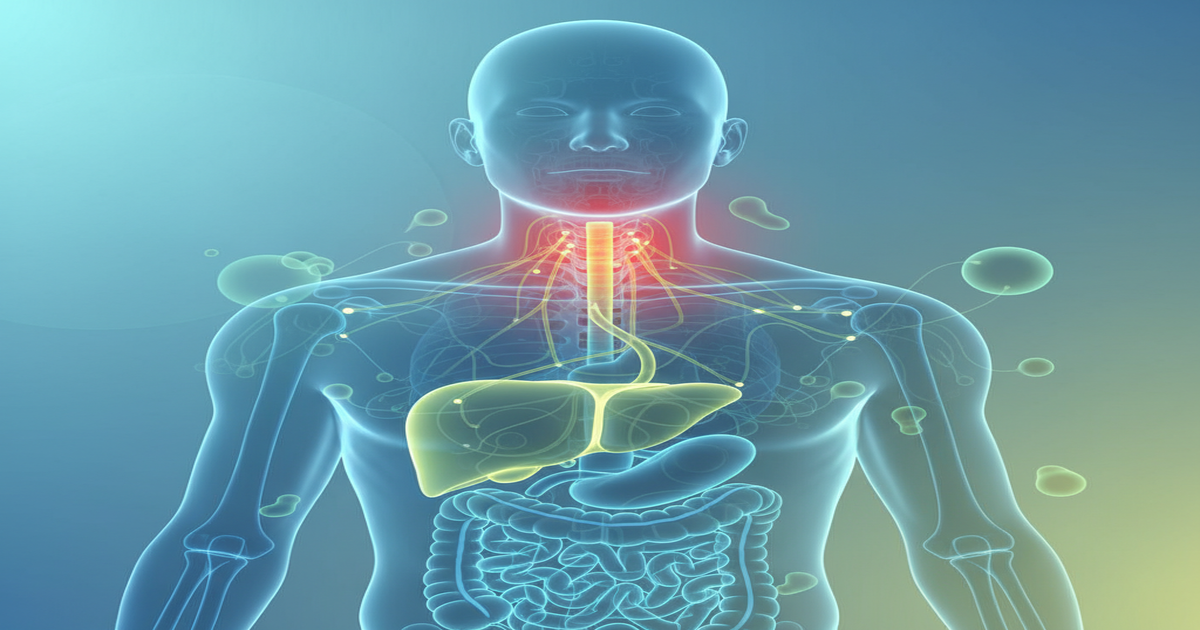
The liver and gallbladder share a referred pain pathway — via the phrenic nerve — that terminates in the right shoulder and neck. When these organs become inflamed or congested, they generate signals that the brain interprets as neck and shoulder pain. This phenomenon is called viscero-somatic referred pain, and it is one of the most underappreciated unexpected causes of neck pain in otherwise healthy adults.
Your liver is the most metabolically active organ in the body, processing nutrients, detoxifying hormones, filtering environmental chemicals, and producing bile. When it becomes overburdened — due to excess dietary fat, ultra-processed food intake, alcohol, or metabolic dysfunction — it begins accumulating fat deposits. This condition, known as non-alcoholic fatty liver disease (NAFLD), is staggeringly common. According to the World Health Organization, an estimated 25% of the global adult population is affected by NAFLD, and most early-stage cases are entirely asymptomatic in ways that standard checkups detect.
The gallbladder, which sits directly beneath the liver, is caught in this dysfunction. When the liver produces thicker, more viscous bile — a direct consequence of hepatic fat accumulation — the gallbladder struggles to contract effectively. Bile stagnates. Sediment and microcrystals (commonly called “sludge”) begin to form, creating internal pressure and low-grade distension within the organ. This pressure doesn’t stay contained. It radiates outward through shared nerve pathways — and that’s where your neck comes in.
Key Takeaway: The liver and gallbladder physically share nerve pathways with the right neck and shoulder. Organ-level inflammation and pressure equal referred neck pain. This is anatomy, not speculation.
Unexpected Causes of Neck Pain: The Phrenic Nerve Is the Missing Link
The phrenic nerve is the anatomical highway connecting abdominal organ dysfunction to neck and shoulder pain. Originating from cervical nerve roots C3, C4, and C5, this nerve is uniquely positioned to relay visceral irritation as somatic pain in the upper body — making phrenic nerve sensitization one of the most clinically significant unexpected causes of neck pain that goes undiagnosed for years.
This mechanism isn’t obscure. It’s documented in every medical anatomy textbook under “referred pain from cholecystitis.” People experiencing acute gallbladder attacks classically report pain radiating sharply to the right shoulder and neck — precisely because the phrenic nerve carries the inflammatory signal from the diaphragm (which the gallbladder and liver press against) upward into the cervical dermatomes. Research published in the World Journal of Gastroenterology confirms that referred shoulder and neck pain is reported in approximately 60% of patients with acute cholecystitis.
But here’s the critical insight for high-performers: acute gallbladder attacks are merely the extreme end of a spectrum. Chronic, low-level liver stress and bile thickening produce a milder but equally persistent version of the same referred pain pattern. Think of the phrenic nerve signal as a volume dial. A gallstone attack turns it to maximum — unmistakable, acute, and alarming. Chronic fatty liver and gallbladder sludge turn the dial to a low, constant hum — subtle enough to dismiss as muscle tension, but persistent enough to erode sleep quality, focus, and physical performance over months and years.
Why Right-Sided Pain Is the Diagnostic Clue
The laterality matters. The liver and gallbladder are located on the right side of the abdomen. The referred pain they generate via the phrenic nerve is therefore predominantly right-sided. If your neck and shoulder discomfort is consistently worse on the right, and if it doesn’t respond to postural correction or physical therapy, organ involvement should be on your diagnostic checklist.
Key Takeaway: The phrenic nerve creates a direct, documented anatomical bridge between your liver and gallbladder and your right neck and shoulder. Chronic organ stress equals chronic low-level neck pain — and most people never connect the two.
Fatty Liver: The Silent Performance Killer Behind Your Neck Pain
Non-alcoholic fatty liver disease (NAFLD) now affects 1 in 4 adults globally and is the most common liver condition worldwide. Beyond its well-publicized metabolic and cardiovascular risks, fatty liver creates inflammatory and mechanical pressure that — via the phrenic nerve pathway — generates persistent right-sided neck and shoulder pain that precisely mimics musculoskeletal conditions.
The modern high-performer’s lifestyle is paradoxically a NAFLD risk factory. Chronic stress elevates cortisol, which drives visceral and hepatic fat redistribution. High consumption of ultra-processed foods — engineered to be hyper-palatable and loaded with fructose and seed oils — directly fuels hepatic fat accumulation. Even certain popular dietary approaches, like high-fat “dirty keto” (heavy on processed meats, excessive nuts, and fat bombs), can worsen liver fat when caloric intake exceeds output and micronutrient quality is neglected.
A 2019 meta-analysis published in the journal Gut found that individuals with NAFLD had significantly elevated systemic inflammatory markers including CRP, IL-6, and TNF-α. These aren’t just biomarkers on a lab report — they are active contributors to whole-body pain sensitization, meaning an inflamed liver amplifies pain signals throughout the body, including in the neck and shoulder region. The result is a compounding feedback loop: poor diet → fatty liver → thickened bile → gallbladder pressure → phrenic nerve irritation → neck pain → disrupted sleep and reduced recovery → more stress → worse dietary choices.
Breaking this cycle requires targeting the foundational layer of the stack: liver and bile health.
Key Takeaway: NAFLD drives both direct mechanical pressure and systemic inflammatory amplification that worsens neck pain. Liver optimization is a legitimate and high-leverage neck pain intervention.
The Dietary Protocol to Address Root-Cause Neck Pain
A targeted, moderate-fat, whole-food dietary approach that eliminates processed foods, reduces excessive fat intake, and incorporates fermented vegetables can significantly reduce liver inflammation, improve bile quality, and — over 6–12 weeks — alleviate the visceral pressure causing referred neck and shoulder pain.
The precision here is critical. This is not a license to pile on bulletproof coffee and fat bombs. The most common mistake in keto for liver health is aggressively overconsumbing fat in a liver that is already metabolically stressed. The goal is to reduce hepatic fat load while supporting detoxification pathways.
Eliminate Immediately
- Ultra-processed foods and refined sugars: The primary accelerants of NAFLD. Fructose in particular is metabolized almost exclusively in the liver, and excess fructose is directly converted to hepatic fat.
- Seed oils (soybean, canola, sunflower): High in inflammatory omega-6 fatty acids that impair hepatic mitochondrial function.
- Excessive nuts: A common keto trap. High in calories and, in large quantities, difficult for an already-burdened liver and gallbladder to process efficiently.
- Alcohol: Even moderate intake significantly impairs hepatic detoxification pathways and worsens fat accumulation.
Add Strategically
- Fermented vegetables (sauerkraut, kimchi, kefir): The probiotic and prebiotic content directly supports the gut-liver axis, reducing hepatic inflammation through improved microbiome diversity.
- Cruciferous vegetables (broccoli, Brussels sprouts, arugula): Contain sulforaphane and DIM compounds that activate liver Phase II detoxification enzymes.
- Bitter foods (dandelion greens, radicchio, endive): Stimulate bile flow through the cholecystic reflex, actively preventing bile stagnation and sludge formation in the gallbladder.
- Quality animal protein: Supports liver cell repair, bile acid synthesis, and choline intake — all critical for hepatic fat export.
A 2020 study published in Cell Metabolism found that a ketogenic dietary intervention reduced liver fat by an average of 31% over 12 weeks in NAFLD patients — a clinically meaningful result that maps directly to reduced organ-level pressure and referred pain improvement.
Key Takeaway: A clean, whole-food, moderate-fat diet with bitter and fermented foods is one of the most evidence-backed interventions for NAFLD and the referred neck pain it generates. Quality of food matters as much as macronutrient ratios.
The Supplement Stack for Liver and Gallbladder Optimization
Targeted supplementation — particularly choline, silymarin (milk thistle), and bile salts — directly supports liver function and bile quality, addressing the biochemical root of gallbladder-related neck pain. These compounds work synergistically with dietary changes to accelerate liver healing and restore normal bile flow dynamics.
Choline (500–1,000mg/day)
Choline is arguably the single most critical nutrient for preventing and reversing NAFLD. It is essential for synthesizing phosphatidylcholine, the key molecule that packages fat into VLDL particles for export out of the liver. Without adequate choline, fat physically cannot leave liver cells and accumulates rapidly. Research from the University of North Carolina demonstrated that choline-deficient diets can induce measurable fatty liver within weeks in otherwise healthy subjects. Whole eggs are the richest dietary source; supplemental choline bitartrate or CDP-choline fills the gap for those not consuming 3–4 eggs daily.
Milk Thistle / Silymarin (140–420mg/day)
Silymarin is one of the most extensively researched hepatoprotective compounds in clinical literature. A 2017 meta-analysis in Phytomedicine found statistically significant reductions in liver enzymes (ALT and AST) in NAFLD patients supplementing with standardized silymarin extract — direct evidence of reduced hepatocellular stress and inflammation.
Ox Bile / Bile Salts (125–500mg with fatty meals)
For those with diagnosed sluggish bile flow or gallbladder sludge, exogenous bile salt supplementation improves fat digestion, reduces gallbladder stagnation, and alleviates the internal pressure contributing to referred pain.
Important note on combining natural compounds with pharmaceuticals: Most of these supplements are well-tolerated alongside medications, but milk thistle in particular can influence cytochrome P450 liver enzymes that metabolize many prescription drugs. Always disclose your supplement stack to your physician before combining with pharmaceuticals.
Key Takeaway: Choline is the non-negotiable foundation of any liver optimization stack. Layer it with milk thistle for anti-inflammatory protection and ox bile for improved bile flow, and you have a targeted, evidence-supported protocol for the root cause of your neck pain.
Frequently Asked Questions
Can neck pain really be caused by the liver or gallbladder?
Yes — and this is well-documented in clinical medicine. The liver and gallbladder share the phrenic nerve pathway (originating at C3–C5) with the right shoulder and neck. When these organs are inflamed or under pressure, as occurs in NAFLD or gallbladder sludge, they generate referred pain that presents as persistent right-sided neck and shoulder discomfort. This is one of the most significant and overlooked unexpected causes of neck pain in adults.
How do I differentiate visceral neck pain from musculoskeletal neck pain?
Key differentiating signs include: (1) pain that is predominantly right-sided; (2) pain that does not improve with sustained physical therapy, stretching, or postural correction; (3) pain that is noticeably worse after high-fat or heavy meals; and (4) the presence of NAFLD risk factors such as metabolic syndrome, excess body fat, high processed food consumption, or elevated liver enzymes on routine bloodwork. An abdominal ultrasound and liver function panel are the first diagnostic steps to confirm or rule out organ involvement.
How quickly can dietary changes reduce neck pain if the liver is the cause?
With a consistent clean dietary protocol and targeted supplementation, liver inflammation markers (ALT, AST) typically begin improving within 4 weeks. Bile quality and gallbladder function normalize progressively over 6–12 weeks. Clinical data on NAFLD reversal consistently shows meaningful reductions in hepatic fat within this 12-week window, at which point referred pain symptoms are generally significantly diminished or resolved.
Why do humans crave the exact foods that damage the liver?
Evolution. The brain’s dopaminergic reward system evolved to strongly prioritize high-calorie, high-fat, and high-sugar foods because in ancestral environments, calorie-dense foods were scarce and critical for survival. Modern food engineering has precisely reverse-engineered this system — designing ultra-processed products that trigger disproportionate dopamine responses without providing nutritional satiety signals. The result is a neurobiological compulsion to consume foods that systematically damage the liver, gallbladder, and metabolic health. Understanding this evolutionary hijack is the first step to overriding it with deliberate protocol-based eating.
Build Your Neck Pain Elimination Stack
The performance professionals who consistently win long-term are the ones who refuse to accept surface-level diagnoses. Persistent right-sided neck pain that doesn’t respond to standard treatment is your body running a diagnostic error code — and the error source is almost always deeper than the symptom location.
Here’s your actionable elimination stack: Layer 1 — Get baseline bloodwork (liver function panel: ALT, AST, GGT) and an abdominal ultrasound to assess liver fat and gallbladder status. Layer 2 — Eliminate ultra-processed foods, seed oils, alcohol, and excessive dietary fat for 8–12 weeks while adding fermented vegetables and bitter greens daily. Layer 3 — Stack choline (500–1,000mg/day), milk thistle (280–420mg/day), and ox bile with fatty meals. Layer 4 — Retest at 8–12 weeks. Correlate changes in liver enzymes with changes in neck pain intensity.
The unexpected causes of neck pain — specifically liver and gallbladder dysfunction — are not exotic edge cases. They affect one in four adults globally and go unidentified for years while people cycle through ergonomic chairs, massage therapy, and anti-inflammatories. The biohacker’s advantage is connecting dots that the average person’s healthcare system never does. Your neck pain may not be a neck problem at all. Treat the stack from the foundation up, and your body will reflect it — in mobility, clarity, and performance.
You might also enjoy: How to Lower Your Heart Rate Before Sleep: The Science-Backed Biohacker’s Protocol
You might also enjoy: Microplastics and Fertility: The Data, the Damage, and the Biohacker’s Fix
You might also enjoy: Bryan Johnson’s Most Profound Experience: What Medically Supervised Psychedelic Therapy Reveals About the Mind