How to Lower Your Heart Rate Before Sleep: The Science-Backed Biohacker’s Protocol
Your pre-sleep cardiovascular state is one of the most underutilized performance levers in modern biohacking. If you want to lower your heart rate before sleep, you are not just chasing a vanity metric — you are engineering the precise physiological conditions for deep, restorative sleep that compounds your cognitive output, metabolic health, and emotional resilience every single day. A chronically elevated pre-bed heart rate is a measurable signal that your sympathetic nervous system is running hot when it should be winding down. The downstream consequences — impaired HRV, suppressed slow-wave sleep, elevated cortisol, and degraded willpower the next morning — are not abstract. They show up in your performance, your decisions, and your long-term health trajectory. This protocol breaks it all down, layer by layer.
Why Your Pre-Sleep Heart Rate Is the Most Important Recovery Metric You’re Ignoring
Direct Answer: Your nocturnal heart rate functions as a real-time proxy for autonomic nervous system balance. A lower resting heart rate at sleep onset correlates directly with higher heart rate variability (HRV), more time in slow-wave and REM sleep, and accelerated physical and cognitive recovery. For high performers, this single number is a nightly report card on your recovery debt.
The American Heart Association defines a healthy adult resting heart rate as 60–100 BPM. But that range is population-wide, not performance-optimized. Elite athletes and high-output professionals tracked via Oura Ring and Whoop consistently report resting heart rates in the low-to-mid 40s — a reflection of superior parasympathetic tone built through deliberate recovery protocols. More critically, research published in the European Heart Journal found that each 10 BPM reduction in resting heart rate is associated with a 9% decrease in all-cause cardiovascular mortality risk (European Heart Journal, 2017). That number should reframe how you think about every behavioral choice you make after 7:00 PM.
Your autonomic nervous system has two primary modes: sympathetic (“fight or flight”) and parasympathetic (“rest and digest”). Quality sleep requires a decisive shift toward parasympathetic dominance before and during sleep onset. When you’re scrolling through your phone, digesting a late dinner, or mentally replaying a stressful conversation, your sympathetic system stays active — and your heart rate stays elevated. The goal of this entire protocol is to systematically remove the stimuli that sustain that activation.
Key Takeaway: Pre-sleep heart rate is not a passive measurement — it is a predictive biomarker for recovery quality, hormonal balance, and next-day cognitive capacity. Treat it like a KPI.
The Four-Hour Fasting Window: How Meal Timing Directly Controls Nocturnal Heart Rate
Direct Answer: Eating within three to four hours of bedtime forces your digestive system into active metabolic mode, elevating your heart rate by 7–15 BPM above baseline through the thermic effect of food and increased gut blood flow. A strict four-hour pre-sleep fasting window allows your body to complete this metabolic work before sleep onset, enabling your parasympathetic system to dominate.
When you consume a meal, your cardiovascular system responds with increased cardiac output to fuel digestion — a process that generates internal heat and keeps your resting heart rate artificially elevated. A study in the Journal of Clinical Sleep Medicine found that high-fat, high-calorie meals consumed within four hours of sleep onset significantly increased waking time after sleep onset (WASO) and reduced overall sleep quality scores (Journal of Clinical Sleep Medicine, 2016). The digestive system is simply not designed to run concurrently with the restorative processes of deep sleep.
The execution is straightforward: if your target sleep time is 11:00 PM, your last caloric intake should conclude by 7:00 PM. Light, protein-forward meals in that final eating window are preferable over large, carbohydrate-heavy dinners that spike insulin and require extended digestion.
The Alcohol Trap
Alcohol deserves a dedicated callout. Despite its initial sedative effect, alcohol is metabolically disruptive to cardiac function through the night. As the liver processes acetaldehyde — alcohol’s primary toxic metabolite — cardiac arousal spikes, particularly in the second half of the night when most REM sleep occurs. Internal Whoop user data from 2021 showed that alcohol consumption elevated average nightly resting heart rate by approximately 8 BPM and reduced HRV by up to 22 points on average. That is not a minor perturbation — it is a near-total wipeout of recovery quality.
The four-hour fasting window, combined with eliminating alcohol within four to five hours of sleep, creates one of the highest-ROI behavioral shifts available to you. No supplement or gadget can compensate for the cardiac stress of late-night eating and drinking.
Key Takeaway: A strict four-hour fasting window before sleep is one of the most direct, high-leverage methods to lower your heart rate before sleep and protect deep sleep architecture. Log your last meal time every night for two weeks and watch what happens to your Oura or Whoop data.
Temperature: The Fastest Physiological Lever to Drop Your BPM
Direct Answer: Core body temperature and heart rate are mechanistically coupled. As core temperature drops, heart rate follows. The optimal bedroom temperature for sleep onset is 65–68°F (18–20°C), a range validated by the Sleep Research Society as the thermal sweet spot for initiating and sustaining restorative sleep cycles.
The body’s natural pre-sleep thermoregulatory process involves routing blood toward the skin’s surface to radiate heat — a process called peripheral vasodilation. You can accelerate this process deliberately. A landmark 2019 meta-analysis in Sleep Medicine Reviews found that passive body heating via warm baths or showers taken 60–90 minutes before bed reduced sleep onset latency by an average of 10 minutes and improved overall sleep quality scores across 13 randomized controlled trials (Sleep Medicine Reviews, 2019). The mechanism: a warm shower heats the skin, triggers aggressive vasodilation and heat dissipation, and leaves core temperature lower than it was before — mimicking and accelerating the body’s natural evening thermal cascade.
Practical Temperature Tactics for High Performers
- Set your thermostat to 65–68°F (18–20°C) before entering the bedroom — ambient temperature is the single most consistent environmental variable for sleep quality.
- Take a lukewarm shower 60–90 minutes before sleep — not ice-cold, which can paradoxically trigger sympathetic activation, but comfortably warm.
- Invest in a cooling mattress solution (Eight Sleep Pod, ChiliPad, or cooling mattress topper) if you sleep hot — mattress surface temperature is directly linked to deep sleep percentage in Oura Ring data.
- Avoid vigorous exercise within three hours of bedtime — training elevates core temperature and sustains elevated cardiac output for up to two to three hours post-workout.
Key Takeaway: Temperature is the fastest-acting environmental variable to lower pre-sleep heart rate. Cool your room, cool your core, and your cardiovascular system will follow within 20–30 minutes.
Breathing Protocols That Directly Activate Your Parasympathetic Nervous System
Direct Answer: Controlled breathing is your direct remote control to autonomic nervous system state. Protocols that emphasize extended exhalation — such as 4-7-8 breathing or the physiological sigh — stimulate vagal tone and can measurably reduce heart rate by 5–15 BPM within four to six minutes. This is the most immediate, zero-cost cardiac deceleration tool in the biohacker’s stack.
The physiological mechanism works through baroreceptor signaling: when you extend your exhalation relative to inhalation, intrathoracic pressure shifts signal your brainstem to downregulate sympathetic drive and upregulate parasympathetic output via the vagus nerve. Research from Harvard Medical School demonstrates that slow, diaphragmatic breathing at four to six breaths per minute significantly increases HRV — the gold-standard measure of parasympathetic activation — within a single breathing session (Harvard Health Publishing). This is not placebo physiology. It is a direct, repeatable mechanical intervention.
Three Breathing Protocols, Ranked by Immediate Cardiac Effect
- Physiological Sigh (Dr. Andrew Huberman, Stanford): A double inhale through the nose (fully inflating, then adding a second sharp sniff) followed by a long, full exhale through the mouth. Clinical research shows this is the fastest single-breath pattern to offload CO2, reduce acute stress, and lower cardiac arousal. Repeat three to five times.
- 4-7-8 Breathing (Dr. Andrew Weil): Inhale for 4 counts, hold for 7, exhale for 8. The extended exhale duration drives the cardiac deceleration. Do four to six full cycles.
- Box Breathing (Navy SEAL Protocol): 4 counts in, 4 hold, 4 out, 4 hold. Used by military units for rapid, reliable nervous system downregulation in high-stress environments. Five minutes brings measurable HRV improvement.
Key Takeaway: Five minutes of structured breathwork before bed is a clinically grounded intervention requiring zero equipment, zero cost, and zero preparation. It is non-negotiable in a serious pre-sleep stack.
The Digital Stimulation Tax: How Late-Night Screen Use Keeps Your BPM Elevated
Direct Answer: Screens before bed impose two simultaneous cardiovascular costs: blue light suppresses melatonin by up to 85%, delaying sleep onset; and emotionally or cognitively stimulating content — social media, news, email — sustains prefrontal cortex and amygdala activation, maintaining cortisol and heart rate 5–10 BPM above resting baseline for up to 90 minutes after exposure ends.
A 2014 study published in the Proceedings of the National Academy of Sciences found that individuals who used light-emitting e-readers before bed had significantly suppressed melatonin levels, elevated alertness ratings, and took on average 10 minutes longer to fall asleep compared to those reading printed books — with measurably reduced next-morning alertness even after eight hours in bed (PNAS, 2014). The blue light effect is real, but it is the content-driven cognitive arousal that most people underestimate.
When you check email at 10:00 PM and encounter an unresolved work problem, your brain activates stress circuitry. Cortisol rises. Heart rate follows. And that physiological response does not reset just because you closed the app. You are still mentally processing the stimulus, which keeps your sympathetic nervous system engaged.
Building a Non-Negotiable Digital Sunset Protocol
- Set a hard cutoff for email, social media, and news at 90 minutes before target sleep time. This is a bright line, not a guideline.
- Charge your phone outside the bedroom. A 2020 study in the American Journal of Preventive Medicine found this single habit reduces nightly screen exposure by an average of 26 minutes.
- Replace screen time with a physical “shutdown ritual”: journal three priorities for tomorrow, do 10 minutes of light stretching, run one of the breathing protocols above, or read a physical book in low ambient light.
- Use blue light filtering (Night Shift, f.lux) as a fallback, not a replacement — filters reduce photonic damage but do not address cognitive stimulation.
Key Takeaway: A structured digital sunset is a prerequisite for pre-sleep heart rate normalization, not an optional wellness add-on. Treat 90 minutes before bed as sacred recovery infrastructure.
Wearable Tech: Turn Pre-Sleep Heart Rate Into a Trackable Daily KPI
Direct Answer: Wearable devices including the Oura Ring Gen 3, Whoop 4.0, and Apple Watch Ultra have converted pre-sleep heart rate from a theoretical health concept into a nightly, data-driven feedback loop. Consistent tracking reveals behavioral correlations — exactly which inputs are driving cardiac arousal — making optimization systematic rather than guesswork.
The Oura Ring measures heart rate every five minutes throughout the night and synthesizes resting heart rate, HRV, and body temperature deviation into a daily “Readiness Score.” Oura’s internal research (2022) demonstrates that nights with elevated resting heart rate — driven by late eating, alcohol, or high stress — directly correlate with reduced next-day motivation scores and self-reported cognitive performance. This is the positive feedback loop operating in reverse: poor pre-sleep cardiac management degrades the willpower and decision-making quality needed to sustain the very habits that protect it.
Whoop 4.0’s Strain vs. Recovery model makes this loop explicit: it quantifies how much physical and emotional load you’ve accumulated and whether your cardiovascular system has recovered sufficiently to perform. High-performing Whoop users consistently identify pre-sleep heart rate management — particularly late-meal cutoffs and digital sunsets — as the behavioral lever with the largest positive effect on their recovery scores.
Setting Up Your Pre-Sleep Heart Rate Tracking System
- Choose your device: Oura Ring (best for granular sleep staging), Whoop 4.0 (best for daily recovery scoring and behavioral journaling), Apple Watch Ultra (best for broader health ecosystem integration).
- Log a nightly note tagging your last meal time, alcohol consumption, exercise timing, and screen cutoff. Most wearable apps support journal tags for this purpose.
- Review weekly trends, not just nightly data — single nights introduce noise. Look for behavioral patterns that consistently shift your BPM delta.
- Set a target: For most adults, entering sleep below 65 BPM indicates adequate parasympathetic tone. Below 60 BPM indicates a well-recovered, high-performing state.
Key Takeaway: What gets measured gets managed. A wearable device transforms pre-sleep heart rate from an invisible health signal into a trackable, improvable performance metric — the foundation of any data-driven biohacking practice.
Frequently Asked Questions: Pre-Sleep Heart Rate
What is a good heart rate to have before sleep?
For most healthy adults, a pre-sleep heart rate below 65 BPM indicates sufficient parasympathetic activation and readiness for restorative sleep. Highly conditioned individuals often measure 45–55 BPM. Consistently reading above 70–75 BPM at bedtime is a signal worth addressing through behavioral interventions before attributing it to genetics or physiology.
How quickly can I lower my heart rate before sleeping?
Acute interventions can produce measurable results within 5–20 minutes. Controlled breathing techniques (4-7-8, physiological sigh) can reduce BPM by 5–15 within a single five-minute session. Temperature changes and light walking produce results within 20–30 minutes. Dietary and sleep hygiene improvements — the four-hour fasting window, digital sunset — compound meaningfully over days and weeks of consistent application.
Does alcohol lower your heart rate before bed?
No — alcohol is a net cardiac negative despite its initial sedative effect. While it may briefly lower heart rate in the first one to two hours, it is metabolized into acetaldehyde, a cardiac stimulant that disrupts heart rate and HRV during the second half of the night. Whoop data consistently shows alcohol elevates average nightly resting heart rate by approximately 8 BPM and suppresses HRV significantly. The perceived relaxation effect masks measurable physiological damage to recovery quality.
Can magnesium supplementation help lower pre-sleep heart rate?
Yes, with nuance. Magnesium glycinate or magnesium threonate (200–400mg taken 30–60 minutes before bed) has demonstrated parasympathetic-supporting effects in clinical research. A meta-analysis published in Nutrients (2021) found magnesium supplementation associated with improved sleep quality and reduced insomnia symptom severity. Mechanistically, magnesium supports GABA-A receptor activity — the primary inhibitory neurotransmitter system — and plays a direct role in regulating cardiac muscle relaxation. It is a useful supplemental layer, not a substitute for the behavioral inputs above.
Build the Stack: Your Pre-Sleep Heart Rate Protocol
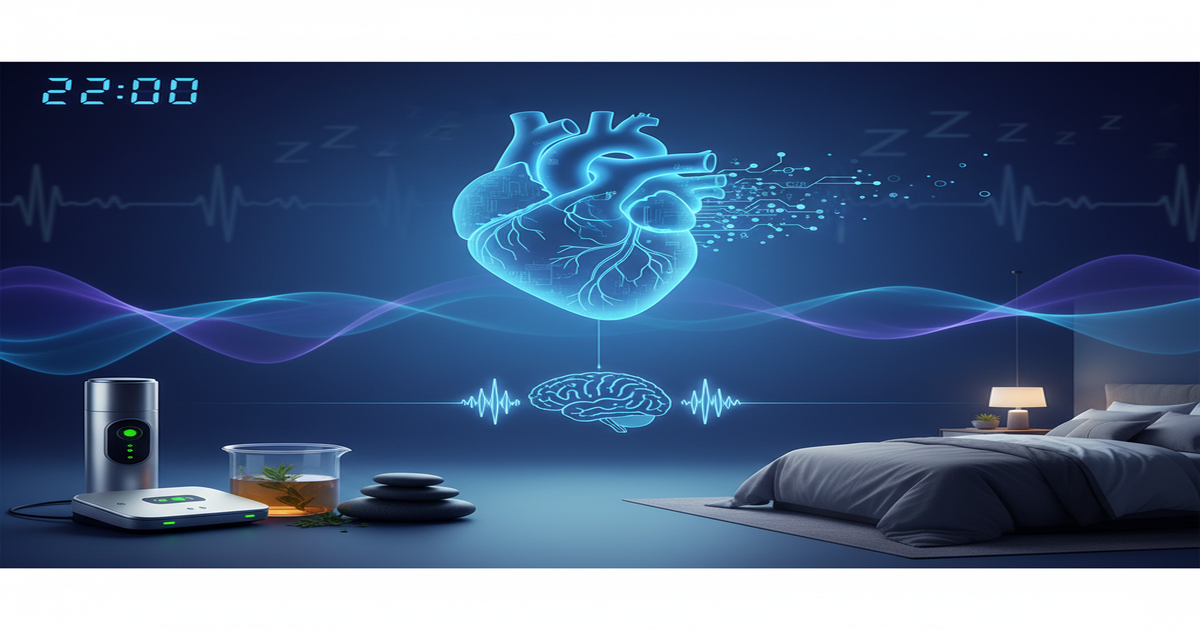
Here is where it all comes together. Mastering your pre-sleep cardiovascular state is the foundational layer of the entire Health Stack — because without high-quality recovery, every other optimization you pursue is built on a compromised engine. When you consistently lower your heart rate before sleep, you are not just improving one night of rest. You are compounding recovery quality that fuels your willpower, metabolic health, and cognitive bandwidth every single day.
The positive feedback loop is real and it runs both directions: superior sleep sharpens the mental clarity and self-regulation needed to make disciplined food choices and stick to your training protocol — which in turn lowers your baseline resting heart rate, which feeds back into deeper, more restorative sleep. This is the stack effect in its most literal form.
Execute these five inputs consistently and track the output with a wearable device:
- Enforce a strict four-hour fasting window before your target sleep time. No alcohol within five hours.
- Set your bedroom to 65–68°F and take a lukewarm shower 60–90 minutes before bed.
- Run five minutes of structured breathwork — physiological sigh, 4-7-8, or box breathing — as your final intentional act before lying down.
- Execute a hard digital sunset 90 minutes before sleep. Phone charges outside the bedroom.
- Track nightly with a wearable and log behavioral tags. Let the data tell you what is working.
These are not suggestions. They are system inputs. Run them with the same discipline you bring to your most important professional commitments, and the output — measurable, compounding, transformative — will follow.
You might also enjoy: Microplastics and Fertility: The Data, the Damage, and the Biohacker’s Fix
You might also enjoy: Bryan Johnson’s Most Profound Experience: What Medically Supervised Psychedelic Therapy Reveals About the Mind
You might also enjoy: Gym Pro vs Gym Bro: The Science-Backed Training Stack for High Performers