
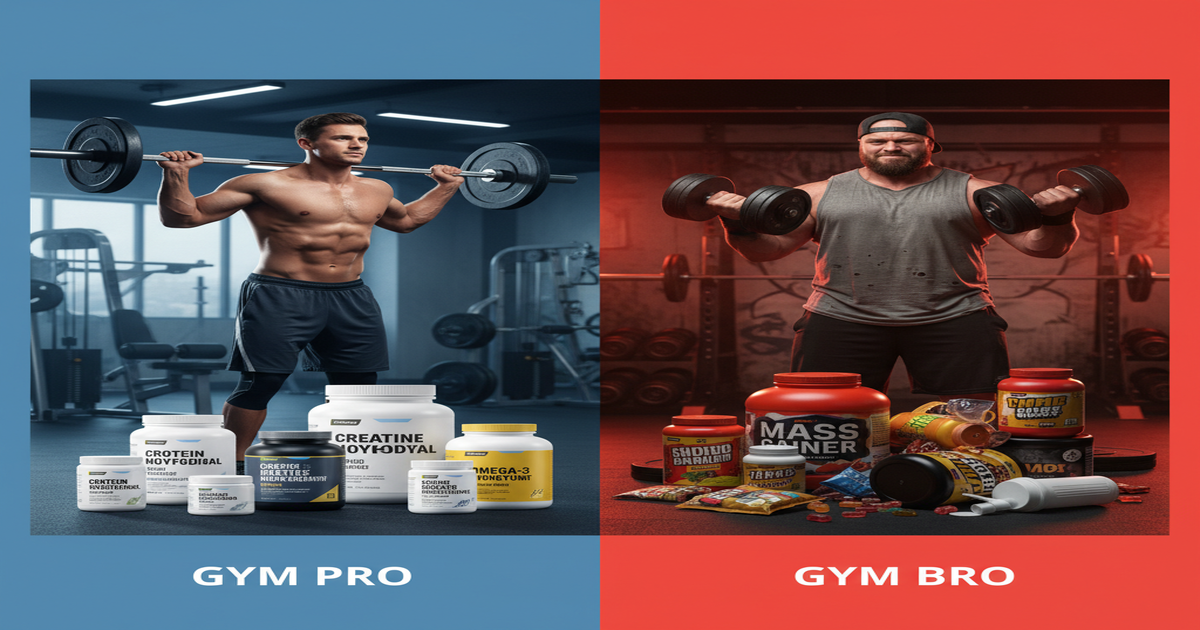
Gym Pro vs Gym Bro: The Science-Backed Training Stack That Actually Builds a High-Performance Body
The gym pro vs gym bro debate isn’t just locker room banter — it represents two fundamentally different philosophies about what the human body is for and how to optimize it. The gym bro chases mirror muscles, maxes out on bench press every Monday, and treats cardio like a punishment. The gym pro treats their body like a high-performance engine: measuring inputs, tracking recovery, and deliberately stacking training modalities for long-term output. If you’re an ambitious professional who wants to look great, perform at a high level, and still move well at 60, the choice between these two frameworks matters enormously. Here’s the complete breakdown of what it means to train like a pro — not just a bro.
What Separates a Gym Pro from a Gym Bro? The Core Philosophy
Direct Answer: A gym bro prioritizes aesthetics and muscle mass through isolated, repetitive training patterns with minimal attention to cardiovascular fitness, mobility, or recovery. A gym pro uses a diversified, science-backed protocol that deliberately balances strength, aerobic capacity, and mobility to optimize both performance and lifespan — treating fitness as a long-term engineering problem, not a short-term vanity project.
At the heart of the gym pro vs gym bro divide is a question of what gets measured. The gym bro measures success by the circumference of his biceps or the number on the bench press bar. The gym pro measures success by VO2 max, resting heart rate, heart rate variability (HRV), and how well they move without pain at age 50.
The gym bro’s playbook hasn’t evolved much since the 1970s: chest on Monday, arms on Tuesday, legs (occasionally) on Thursday, and repeat until a shoulder injury forces a two-week break. It’s a framework designed for short-term aesthetics with minimal crossover to real-world performance or longevity. The gym pro, by contrast, deliberately engineers their training week around a diverse set of physiological adaptations — anaerobic strength, aerobic capacity, and neuromuscular flexibility — all working in concert.
The data is stark: research published in JAMA Network Open found that individuals with the highest cardiorespiratory fitness levels have a 45% lower all-cause mortality risk compared to the least-fit group. That is a statistical advantage that isolated bicep curls and a protein shake cannot replicate.
Key Takeaway: The gym pro vs gym bro split comes down to optimization versus vanity. Pros train for systems and long-term outputs; bros train for short-term aesthetics. If you want to perform at a high level for decades — not just look good for a summer — the gym pro framework isn’t optional. It’s the only rational choice.
The Gym Pro’s Diversified Weekly Training Protocol
Direct Answer: A gym pro’s weekly training stack balances three deliberate modalities: heavy compound strength training (2–3 sessions), Zone 2 aerobic conditioning (2–3 sessions), and targeted mobility work performed daily or near-daily. This multi-layered approach simultaneously builds aesthetics, functional performance, and long-term physical resilience — without sacrificing any one for another.
The gym bro’s favorite question is “what’s your split?” The gym pro’s is “what are my adaptation goals this training block?” This distinction reveals the strategic depth separating these two philosophies. Here’s what a high-performance weekly training stack actually looks like in practice:
Layer 1: Strength Training (2–3 Days/Week)
Focus exclusively on compound, multi-joint movements: deadlifts, squats, pull-ups, overhead press, and barbell rows. Work in the 4–8 rep range with systematic progressive overload — adding weight, reps, or density over time. The goal is functional strength and structural integrity, not pump. Gym pros aren’t doing five sets of cable curls; they’re building the foundational musculoskeletal resilience that protects every other system in the body.
Layer 2: Aerobic Capacity (2–3 Days/Week)
Zone 2 cardio — 45 to 60 minutes at 60–70% of maximum heart rate, where you can hold a conversation — is the cornerstone of elite long-term performance. It builds mitochondrial density, dramatically enhances fat oxidation, and is one of the most powerful cardiovascular health interventions available. Gym bros skip this layer entirely. Gym pros treat it as non-negotiable infrastructure.
Layer 3: Mobility Work (Daily, 10–15 Minutes)
Dynamic stretching, targeted joint mobility drills, or yoga sequences focused on hips, thoracic spine, and shoulders. This is the layer that allows all other training to remain sustainable over a lifetime. Skip it and the other two layers will inevitably collapse under accumulated tightness and injury.
Key Takeaway: A well-engineered training week isn’t random — it’s a deliberate stack. Every session has a clear physiological purpose, every modality a specific adaptation target. Build your training week like a performance program, not a mood-dependent workout.
Why High Performers Combine HIIT and Zone 2 Cardio — And the Mortality Data Behind It
Direct Answer: Combining high-intensity interval training (HIIT) with steady-state Zone 2 cardio creates synergistic cardiovascular and metabolic adaptations that neither modality produces alone. Research consistently demonstrates that this combined approach delivers significantly greater reductions in all-cause and cardiovascular mortality risk than either type of cardio performed in isolation.
This is where the performance gap between the gym pro and gym bro becomes quantifiable. A landmark study published in the Journal of the American Heart Association found that individuals who performed both vigorous-intensity and moderate-intensity exercise had a significantly lower risk of cardiovascular mortality than those who performed only one type — confirming what elite coaches and longevity researchers have long advocated. The combined protocol is specifically more powerful than the sum of its parts.
Here’s the practical breakdown of how gym pros structure their cardio stack:
- Zone 2 Cardio (60–70% max heart rate): Builds aerobic base, improves mitochondrial efficiency, supports recovery between strength sessions. Target a minimum of 150 minutes per week — spread across 2–3 sessions. Activities: brisk walking, cycling, rowing, or swimming at a conversational pace.
- HIIT / Sprint Intervals (85–95% max heart rate): Boosts VO2 max, stimulates fast-twitch fiber adaptation, spikes metabolic rate. Limit to 1–2 sessions per week of 20–30 minutes to avoid systemic fatigue accumulation.
The combination doesn’t just make you faster and fitter — it fundamentally extends your health span. Longevity researchers including Dr. Peter Attia consistently identify VO2 max as the single strongest modifiable predictor of lifespan, outperforming smoking cessation and most pharmaceutical interventions in its effect size. The gym bro ignores this metric entirely. The gym pro trains toward it systematically, every single week.
Key Takeaway: Don’t choose between sprints and steady-state cardio — the science says you need both. The combination of HIIT and Zone 2 produces synergistic longevity benefits that neither delivers alone, making it one of the highest-leverage investments in your long-term health stack.
Sleep Hygiene and Training Timing: The Performance Variables Nobody Talks About
Direct Answer: Sleep is not passive recovery — it is the primary anabolic and neurological repair mechanism of the human body. Training timing, sleep duration, and sleep quality are as important as the training stimulus itself. Gym pros optimize all three with data; gym bros optimize none of them with intention.
The gym bro chugs a pre-workout at 9 PM, hits the gym at 10 PM, and wonders why he feels wrecked all week. The gym pro understands a fundamental physiological truth: when you train is nearly as important as how you train. Late-night high-intensity sessions elevate cortisol and core body temperature for hours afterward, directly suppressing the melatonin secretion required to initiate restorative deep sleep cycles.
The stakes are enormous. University of Chicago researchers found that sleep-deprived subjects averaging just 5.5 hours per night lost 60% more lean muscle mass and 60% less body fat than subjects sleeping 8.5 hours — on the exact same calorie-restricted diet and training protocol. Sleep is literally the variable determining whether your effort in the gym translates into the body you want or systematically dismantles it.
The Gym Pro’s Sleep and Recovery Protocol
- Target 7–9 hours of sleep anchored to a consistent wake time, seven days a week
- Avoid high-intensity training within 3 hours of your target bedtime
- Use wearables — Oura Ring, WHOOP Strap, or Garmin — to track HRV and sleep stages nightly
- Maintain a sleep environment at 65–68°F (18–20°C) with complete darkness and minimal noise exposure
- Use morning HRV data to calibrate training intensity: low HRV = reduce intensity, prioritize Zone 2 or active recovery
HRV tracking is the gym pro’s data edge. A suppressed HRV score the morning after a hard training session signals the nervous system is under-recovered — meaning pushing hard that day will generate more cortisol stress than adaptive stimulus. The gym bro guesses. The gym pro reads the data and adjusts. Over 12 months, this distinction translates directly into fewer injuries, more consistent training blocks, and compounding physical adaptation.
Key Takeaway: Sleep is the most powerful and most underutilized performance-enhancing protocol available — and it costs nothing. Treat your sleep window with the same non-negotiable discipline you bring to your most important training sessions. Without sleep optimization, every other layer of your health stack is operating at a fraction of its potential.
Mobility and Longevity: The Layer Gym Bros Always Skip Until It’s Too Late
Direct Answer: Mobility training is not an optional add-on for high performers — it is the structural foundation that keeps all other training sustainable over a lifetime. Gym pros incorporate deliberate mobility work to prevent chronic injury, optimize movement efficiency, and maintain functional independence across decades of demanding physical activity.
Data from the American College of Sports Medicine indicates that athletes who incorporate at least two dedicated mobility sessions per week report up to 30% fewer musculoskeletal injuries than those who neglect it. Gym bros who skip mobility work are engineering a high-performance machine on a structurally compromised chassis — and the breakdown is inevitable, not theoretical.
Gym pros target three high-yield mobility areas that desk-bound professionals consistently under-develop:
Hip Flexors and Posterior Chain
Chronic hip flexor tightness — nearly universal among professionals who sit for 8+ hours daily — directly impairs squat depth, deadlift mechanics, and running gait. Daily hip flexor and glute mobility work reverses this pattern and removes the single most common compensation that leads to lower back injury in the weight room.
Thoracic Spine Extension and Rotation
Thoracic mobility is the foundation of every overhead pressing movement and underpins healthy posture throughout the day. A stiff thoracic spine is a direct and well-documented pathway to shoulder impingement — the most common chronic injury among male gym-goers between ages 30 and 50.
Ankle Dorsiflexion
Restricted ankle mobility is the most underrated lower-body variable in strength training. It creates compensatory movement patterns that travel up the entire kinetic chain, contributing to knee valgus, hip instability, and lower back strain — all of which are frequently misdiagnosed as “technique problems” when the root cause is joint restriction at the ankle.
Key Takeaway: Mobility is the longevity layer of your training stack — and neglecting it will eventually make every other layer inaccessible. Ten to fifteen minutes of daily mobility work has one of the highest long-term ROIs of any physical health investment you can make.
Frequently Asked Questions: Gym Pro vs Gym Bro
Can you build an impressive physique using the gym pro approach, or do you have to sacrifice aesthetics for health?
You don’t sacrifice anything. Compound strength training, consistent progressive overload, and adequate protein intake produce significant and visible muscular development. The gym pro approach doesn’t compromise aesthetics — it ensures your physique comes packaged with a high-functioning cardiovascular system, injury resilience, and the kind of baseline energy that makes you look and feel athletic in real life, not just under gym lighting.
How much cardio should you do if your primary goal is building muscle mass?
Research consistently shows that 2–3 sessions of low-to-moderate intensity Zone 2 cardio per week does not meaningfully impair hypertrophy and significantly improves cardiovascular health, mitochondrial density, and training recovery capacity. Add one HIIT session per week to stimulate VO2 max adaptations. This protocol rounds out the training stack without compromising muscle growth — and dramatically improves the physiological environment in which muscle is built.
What wearable technology do gym pros actually use to optimize their training?
The most widely adopted tools among serious athletes and biohackers are the Oura Ring (sleep staging and nightly HRV tracking), WHOOP Strap (daily recovery scoring and training strain monitoring), and Apple Watch or Garmin (real-time heart rate zone monitoring during workouts). Each provides actionable, day-by-day data that eliminates guesswork from training intensity decisions — one of the clearest operational advantages the gym pro holds over the gym bro.
Is the gym pro protocol too complex for someone just starting out?
It’s actually simpler over the long term. Start with two strength sessions, two Zone 2 cardio sessions, and ten minutes of daily mobility work per week. Build progressively from there. The gym bro approach is, counterintuitively, more complex — it requires constant program-hopping, supplement experimentation, and aggressive troubleshooting as recurring imbalances and injuries accumulate from years of one-dimensional training.
Conclusion: Stack Your Training Like a Pro, Not a Bro
The gym pro vs gym bro framework ultimately reduces to one foundational question: are you optimizing for the next 90 days, or the next 40 years? The gym bro optimizes for a photo. The gym pro optimizes for a body that remains a high-performance asset rather than a compounding liability as the decades accumulate.
Your physical health is the foundational layer beneath every other success stack you’re building. Without a high-functioning body and brain — without consistent energy, structural resilience, and cognitive sharpness — the wealth you accumulate and the systems you build are constructed on unstable ground. The gym pro’s protocol is not complicated. It is simply the application of the same analytical rigor you’d bring to a financial portfolio or a business system: measure inputs, diversify intelligently, stay consistent, and let compounding do the heavy lifting over time.
Start this week. Audit your current training program against the gym pro framework. Are you doing Zone 2 cardio? Are you tracking HRV and making data-driven decisions about training intensity? Are you sleeping 7–9 hours in a consistent window? Are you incorporating daily mobility work? Every “no” is a missing layer — and missing layers compound into compromised performance, accelerated injury risk, and a shorter health span than you’ve earned.
The stack is clear. Build it with intention. Train like a pro.
Disclaimer: This content is for informational purposes only and does not constitute medical advice, diagnosis, or treatment. Always consult with a qualified healthcare professional before making any health-related decisions.
You might also enjoy: How to Lower Your Heart Rate Before Sleep | The Science-Backed Recovery Protocol
You might also enjoy: Just 7 Seconds: The Science-Backed Biohacks That Rewire Your Body and Brain
You might also enjoy: The 7-Second Biohack Stack: Rewire Your Biology in Seconds
You might also enjoy: Before You Take Peptides, Know This: A Data-Driven Safety Guide