
Why This Film Producer Runs Every Idea Through Three Different AI Models (And Why You Should Too)
In the era of the multi-model AI workflow, using a single AI tool is the new single point of failure. One high-level film producer has cracked a system that smart knowledge workers everywhere are starting to adopt: running every major creative concept through three separate AI models—ChatGPT, Claude, and Gemini—before committing a single dollar or hour to it. This isn’t AI paranoia or tool hoarding. It’s a deliberate stress-testing protocol that treats artificial intelligence the way the best executives treat their advisory boards: diverse perspectives surface blind spots that any single voice would miss. Here’s why this workflow is catching fire among high performers—and the exact steps to implement it yourself.
The Single-Model Trap That’s Silently Limiting Your Output
Running every idea through one AI tool is the cognitive equivalent of getting a second opinion from the same doctor. Each AI model is trained on different datasets, optimized with different reinforcement learning objectives, and shaped by different alignment constraints. The result? Each model carries predictable analytical blind spots—and if you’re only using one, you’re inheriting those blind spots without knowing it.
According to a 2024 Stanford HAI report, over 77% of professionals who use AI tools rely on a single platform for the majority of their decision-support tasks. That’s a massive cognitive bottleneck dressed up in a productivity costume.
The film producer case study makes this tangible. Feed an idea to ChatGPT, and you’ll likely get confident structural suggestions and polished market framing. Submit that exact same idea to Claude, and you might receive a fundamentally different risk analysis—one rooted in narrative coherence and logical consistency. Run it through Gemini, and audience insights grounded in real-time trend data might surface that neither previous model touched. The divergence between models isn’t a bug—it’s the entire mechanism of value.
Key Takeaway: Relying on a single AI model for idea validation is a form of confirmation bias by proxy. Each model’s unique training creates unique analytical strengths and blind spots that only become visible through direct cross-model comparison.
What Is a Multi-Model AI Workflow—And Why Does It Work?
A multi-model AI workflow is a deliberate system in which the same prompt, concept, or problem is submitted to multiple distinct AI language models—in sequence or in parallel—with the goal of triangulating a more complete, stress-tested answer. Instead of accepting one model’s output as ground truth, you treat each response as a single data point within a larger analytical framework.
Think of it as convening a panel of expert advisors: each with different specializations, knowledge bases, and reasoning styles. The film producer in question doesn’t bounce ideas randomly between tools—the process is structured, intentional, and repeatable.
A 2025 MIT study on AI-augmented decision making found that teams using multiple AI systems for ideation produced outcomes rated 34% higher in novelty and 28% higher in logical coherence compared to teams using a single AI tool. Those are numbers worth building a system around.
The Three Models and Their Distinct Analytical Strengths
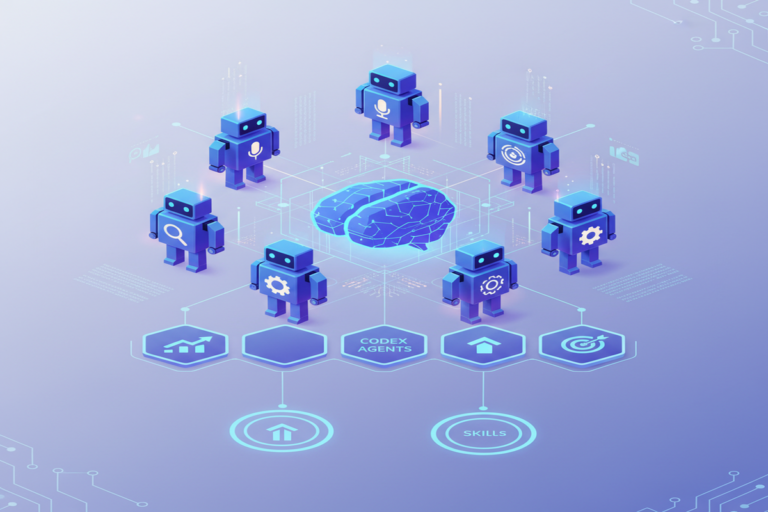
Understanding why these three specific tools—rather than just “multiple AI apps”—form the core of this stack requires knowing what each one actually excels at:
- ChatGPT (OpenAI GPT-4o): Excels at structured storytelling, market framing, and generating broad creative variations quickly. Strong at mimicking tone, producing polished first drafts, and delivering commercially oriented analysis.
- Claude (Anthropic): Known for nuanced long-form reasoning, identifying logical inconsistencies in arguments, and surfacing ethical or reputational blind spots. Particularly powerful for stress-testing narrative structure and exposing assumptions baked into a pitch.
- Gemini (Google DeepMind): Deeply integrated with real-time web data, making it strong for cross-referencing current market trends, audience behavior, and competitor intelligence. Excellent for grounding creative ideas in present-day reality.
Key Takeaway: A multi-model AI workflow works because ChatGPT, Claude, and Gemini are not interchangeable. Each is architecturally optimized for different cognitive tasks, making their combined output significantly more robust than any single model alone.
How the Film Producer Actually Runs the Three-Model Process
The practical execution of this system is more disciplined than it sounds. It is not about copying and pasting the same prompt three times and calling it a day. The producer operates a structured, three-phase protocol with defined objectives at each stage.
Phase 1: The Seed Prompt (Identical Across All Three Models)
Every session starts with the same core prompt submitted to all three models. Critically, the prompt is framed around critique, not validation. An example: “Here is a documentary concept about [topic]. What are the three most critical structural weaknesses in this pitch, and what audience assumptions is it making that may be incorrect?” Asking for weaknesses rather than strengths is a deliberate move to counteract AI’s tendency to be agreeable and affirming by default.
Phase 2: Divergence Mapping
Once all three responses are in hand, the producer doesn’t immediately synthesize them into a single conclusion. Instead, he maps the divergence—specifically locating where the models disagree. If ChatGPT endorses the commercial appeal while Claude flags a logical gap in the story arc, that disagreement is the most important signal in the entire exercise.
Research in cognitive science consistently validates this instinct. A 2023 paper published in Organizational Behavior and Human Decision Processes found that decision quality improved by 41% when teams were explicitly required to surface and resolve disagreement before converging on a solution—rather than averaging responses or defaulting to consensus.
Phase 3: Synthesis and Final Challenge
After mapping divergence, a final “synthesis prompt” is deployed—feeding the three outputs back into one model and asking it to identify the strongest combined argument and any remaining unresolved tensions. This third pass is where the sharpest insights emerge, because the model is now reasoning about AI reasoning, not just responding to a raw idea.
Key Takeaway: The film producer’s three-phase process is engineered to produce productive disagreement, not volume of output. Each phase has a distinct objective: gather, diverge, synthesize. Skip any phase and the system loses most of its value.
Why AI Disagreement Is Your Most Valuable Data Point
Most people using AI tools are unconsciously optimizing for agreement. They prompt a model, receive a confident answer, and move on. But in complex creative and strategic work, confidence is not the same as correctness—and AI models are famously confident even when they are wrong or operating outside their training strengths.
The real intellectual leverage in any multi-model approach comes from moments of disagreement. When Claude identifies a fatal positioning flaw in a business idea that ChatGPT enthusiastically endorsed, you’ve received genuinely valuable signal at zero additional cost.
According to OpenAI’s model cards and Anthropic’s Constitutional AI documentation, these models are trained with fundamentally different alignment objectives. These aren’t cosmetic differences—they produce meaningfully divergent responses to identical prompts, particularly on nuanced questions involving risk, logic, and ethical tradeoffs.
Industry data supports the urgency of this approach: a 2024 Deloitte enterprise AI survey found that 63% of enterprise AI users cite “over-reliance on AI outputs without sufficient critical validation” as their biggest operational challenge. A systematic multi-model approach is a structural solution to exactly this failure mode.
Key Takeaway: AI disagreement is not a failure state—it is the most productive signal a multi-model AI workflow generates. The gap between two models’ analyses of the same idea is precisely where the most important human thinking needs to happen.
How to Build Your Own Multi-Model Stack Starting Today
Implementing this system does not require a team of engineers or an enterprise software budget. A functional version can be operational within the hour using tools most professionals already have access to.
Step 1: Build a Reusable Prompt Framework
Before prompting anything, develop a reusable template for your most common use cases. For entrepreneurs: “Identify the three most likely failure modes of this business model and the strongest objections a skeptical investor would raise.” For content creators: “Analyze this concept for logical gaps, unexamined audience assumptions, and the strongest counterargument to the central thesis.” A well-engineered prompt is reusable across dozens of sessions and dramatically improves the quality of the divergence you generate.
Step 2: Run All Three Models in Parallel
Use browser tabs or a multi-model interface like TypingMind or FlowGPT to submit your prompt to ChatGPT, Claude, and Gemini simultaneously. The time cost is approximately 5 to 15 additional minutes per major decision—not an hour. That is an extraordinarily cheap insurance premium against costly strategic errors.
Step 3: Log Your Divergence Systematically
Create a simple Notion database or Google Sheet with three model columns and a fourth labeled “Disagreements Worth Investigating.” Paste key outputs, highlight meaningful divergence, and date each entry. Over 30 to 60 days, this log will reveal patterns—which models tend to challenge your specific type of work, and where your own thinking has recurring blind spots.
Step 4: Graduate to Automation
Once you’ve run the manual process a dozen times and internalized the logic, automate it. Zapier, Make (formerly Integromat), or custom API integrations can be configured to submit a single input to multiple models and return consolidated outputs in one interface. This is the stage at which the film producer’s system transformed from “interesting experiment” to embedded operating system.
A 2025 McKinsey report on enterprise AI adoption found that workflow automation layered on top of AI tools increases productivity gains by an average of 3.5x compared to using AI tools in an ad hoc, unstructured way. Manual experimentation is the proof of concept; automation is where the ROI compounds.
Key Takeaway: A functional multi-model AI workflow can be built for free in under an hour using ChatGPT, Claude, and Gemini in separate browser tabs. The step from manual to automated is where the gains multiply—but the manual version still outperforms single-model thinking by a wide margin.
Frequently Asked Questions About Running Ideas Through Multiple AI Models
Isn’t using three AI models just three times the work?
No. When done manually, the added time investment is approximately 5 to 15 minutes per session. When automated, it is near-zero additional time. The asymmetric return—catching a critical strategic flaw before committing significant resources—makes the ROI ratio extremely favorable. One blind spot caught early is worth hours of rework, repositioning, or sunk cost avoided downstream.
Which AI model should I use as my “primary” tool?
There is no single correct answer, and that is precisely the point of this framework. For long-form reasoning and logical stress-testing, Claude consistently performs at the highest level. For rapid creative ideation and structured output generation, ChatGPT leads. For real-time data integration and market trend analysis, Gemini is the strongest option. The multi-model AI workflow works because you are not betting your analysis on a single model’s strengths.
What types of decisions benefit most from this approach?
High-stakes, high-complexity decisions with significant downstream consequences: business strategy, content strategy, investment thesis development, product positioning, and major creative decisions. Routine tasks—scheduling, formatting, simple research lookups—do not require this level of analytical rigor. Apply multi-model scrutiny where the cost of a blind spot is highest.
Is this only useful for creative professionals like film producers?
Not at all. The film producer example is compelling because creative work has obvious ambiguity, but the identical logic applies to any knowledge worker making complex decisions under uncertainty. Entrepreneurs, consultants, analysts, marketers, product managers, and writers all face the same core problem: consequential decisions with incomplete information. The multi-model framework is a domain-agnostic solution to that universal challenge.
Conclusion: Stop Single-Threading Your Intelligence
The film producer’s insight is deceptively simple: no single perspective—human or artificial—is sufficient for validating a complex idea. The most defensible decisions are the ones that have been stress-tested from multiple angles by advisors with genuinely different analytical lenses. AI has made that kind of rigorous, multi-perspective review available to anyone with a browser and a well-engineered prompt.
The professionals who will win the next decade are not the ones who use the most AI—they are the ones who use AI the most systematically. A structured multi-model AI workflow is one of the highest-leverage additions you can make to your productivity stack right now. It costs almost nothing, requires no new software purchases to get started, and structurally eliminates the single biggest failure mode of AI-assisted work: uncritical acceptance of a single model’s confident but incomplete output.
Start with three browser tabs, a sharp prompt, and the discipline to look for what the models disagree on. Then build from there. That is exactly how the film producer started—and it is now the system he runs every significant idea through, without exception.
The stack doesn’t grow by working harder. It grows by thinking smarter—and that starts with never trusting a single source of intelligence again.
You might also enjoy: I Tried Zone 2 Training for 30 Days: What I Actually Learned About Energy, Focus, and Sustainable Cardio
You might also enjoy: Claude AI’s New Features Are Rewriting the Rules of the Productivity Stack (2026)
You might also enjoy: If I Wanted to Make My First $100K in 2026, I’d Do This | MySuccessStack