How to Lower Your Heart Rate Before Sleep: The Science-Backed Protocol for Peak Recovery
If you track your sleep with an Oura Ring, WHOOP strap, or Apple Watch, you have already seen the data: nights where your resting heart rate stays elevated almost always correlate with crushed recovery scores the next morning. Learning how to lower your heart rate before sleep is not a wellness trend — it is a measurable, engineerable variable that separates high performers from the chronically exhausted. Your pre-sleep cardiovascular state determines how decisively your nervous system can shift into parasympathetic mode, which is the biological prerequisite for restorative, regenerative sleep. This guide breaks down the exact protocols — from breathing mechanics and meal timing to temperature manipulation and a targeted supplement stack — that will bring your heart rate down systematically, night after night.
Why Your Pre-Sleep Heart Rate Is the Most Overlooked Recovery Metric
Your pre-sleep heart rate is a real-time readout of your nervous system’s total stress load. A heart rate that is too high when you lie down signals unresolved physiological stress — elevated cortisol, active digestion, or residual sympathetic activation from screens or unfinished mental loops. Treating this single number as a nightly performance KPI is one of the highest-leverage interventions available for sleep quality and long-term health.
A large-scale study published in the journal Heart tracking over 29,000 adults found that individuals with a resting heart rate between 71–80 bpm had a 51% higher risk of cardiovascular death compared to those maintaining a resting heart rate at or below 60 bpm. While this covers resting HR broadly, the mechanistic principle is clear: a chronically elevated heart rate is a downstream signal of chronic stress load, and your pre-sleep window is your last daily opportunity to actively intervene.
The Sympathetic-Parasympathetic Seesaw
Your autonomic nervous system operates on a seesaw. The sympathetic branch — fight-or-flight — accelerates heart rate and keeps you alert. The parasympathetic branch — rest-and-digest — decelerates it and initiates cellular repair. Deep, restorative sleep requires a decisive, sustained shift toward parasympathetic dominance. Every item in this protocol is specifically engineered to tip that seesaw in the right direction before your head hits the pillow.
Modern wearables have democratized this metric. Both WHOOP and Oura Ring surface nighttime resting heart rate as a core input for daily recovery and “readiness” scores. When your pre-sleep HR drops efficiently, your Heart Rate Variability (HRV) — the gold-standard proxy for autonomic nervous system health — tends to rise, indicating your body is primed for deep, cellular-level repair and hormonal restoration.
Key Takeaway: A high pre-sleep heart rate is a measurable signal of nervous system overload. Targeting it nightly with deliberate, layered protocols directly improves HRV, deep sleep architecture, and long-term cardiovascular health — making it the foundational metric of any serious recovery stack.
How to Lower Your Heart Rate Before Sleep With Breathing Protocols
Controlled breathing is the fastest, most clinically validated method to activate the parasympathetic nervous system and reduce heart rate in real time. The vagus nerve — the primary neural highway of the parasympathetic system — is directly stimulated by slow, extended exhalations. This gives you direct, physiological control over your cardiac state using nothing but your breath.
The 4-7-8 Breathing Technique
Developed by Dr. Andrew Weil, the 4-7-8 method functions as a pharmacological-grade tranquilizer for the nervous system — without the pharmaceutical. The mechanics are simple: inhale quietly through the nose for 4 counts, hold for 7 counts, then exhale completely through the mouth for 8 counts. The extended exhale is the active mechanism — it dramatically increases vagal tone and activates the baroreceptor reflex, which directly signals the heart to slow down. Four consecutive rounds of 4-7-8 breathing, practiced 10–15 minutes before your target sleep time, can reduce heart rate measurably within two to three minutes of starting.
Box Breathing for Sympathetic Downshift
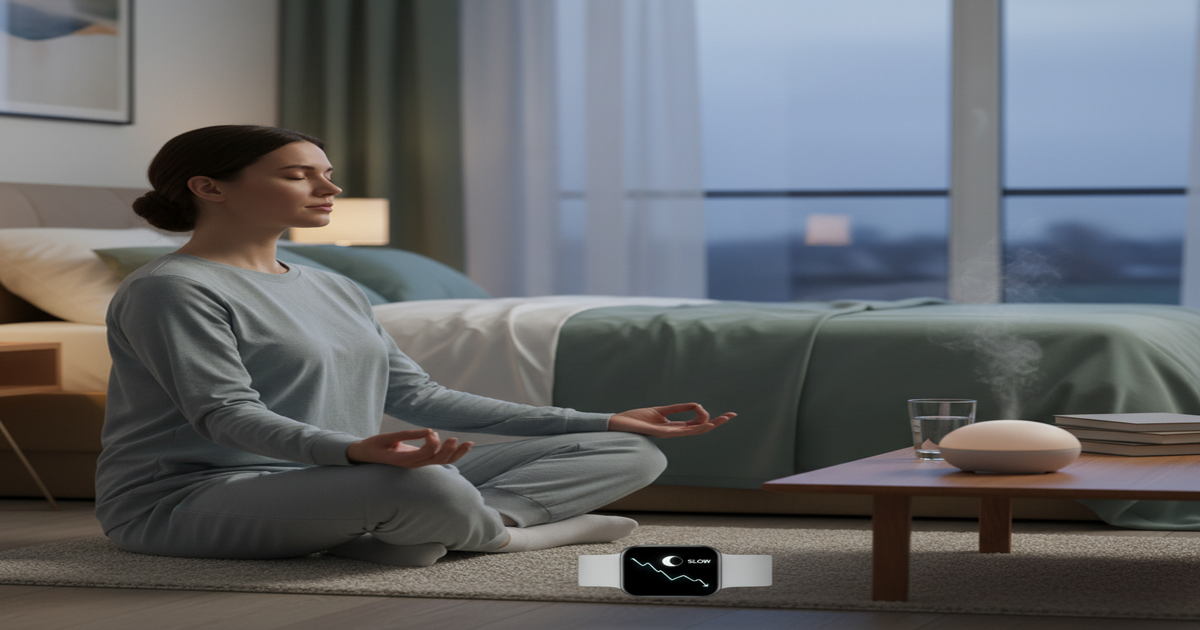
Box breathing — a 4-count inhale, 4-count hold, 4-count exhale, 4-count hold — was originally developed for Navy SEALs to manage acute physiological stress responses in the field. Research published in the Journal of Athletic Training confirmed that structured, rhythmic breathing exercises significantly reduce sympathetic nervous system activity and produce measurable decreases in heart rate. For pre-sleep use, 5–10 minutes of box breathing in a dark, cool room is a clinically credible wind-down tool. Pair it with progressive muscle relaxation — sequentially tensing and releasing major muscle groups from feet to face — for a compounding parasympathetic effect.
Key Takeaway: Breathing is your fastest lever for parasympathetic activation and requires zero equipment. The 4-7-8 and box breathing techniques produce measurable heart rate reductions within minutes by directly stimulating vagal tone — making them the first protocol to implement in any pre-sleep stack.
The 4-Hour Pre-Sleep Fasting Window: Your Most Underrated Protocol
One of the most impactful and least discussed ways to lower your heart rate before sleep is to stop eating at least four hours before bed. Digestion is a metabolically expensive process that keeps your heart rate elevated, maintains a higher core body temperature, and holds your autonomic nervous system in a partially activated state. Late-night eating is not just bad for body composition — it is a direct, physiological saboteur of cardiovascular calm at the moment you need it most.
The Physiology of Late-Night Eating and Cardiac Elevation
Circadian biology research consistently demonstrates that late-night meals — particularly those high in refined carbohydrates or saturated fat — trigger a post-prandial insulin surge and thermogenic effect that can elevate resting heart rate by 3–5 bpm for two to four hours. While that may sound marginal, it mechanistically compresses your slow-wave deep sleep stages, which are the primary windows for human growth hormone secretion, tissue repair, and immune system restoration.
There is also a powerful behavioral dimension to this protocol. Implementing a strict four-hour pre-sleep fasting window creates a measurable positive feedback loop: better cardiovascular calm at night drives higher-quality sleep; higher-quality sleep restores prefrontal cortex function — the neurological seat of impulse control and decision-making — which makes it dramatically easier to maintain nutritional and behavioral discipline the following day. The discipline to stop eating early reinforces the discipline to make better choices throughout the entire day. It is a self-compounding system.
What to Consume in the Final Pre-Sleep Window
If your schedule requires eating closer to sleep, prioritize light, easily digestible foods that actively support, rather than disrupt, your cardiac wind-down. A small serving of cottage cheese (rich in casein protein and tryptophan, a melatonin precursor), tart cherry juice (a natural dietary source of melatonin), or a magnesium-rich banana are viable options. Eliminate alcohol entirely — despite its sedative reputation, alcohol measurably suppresses Heart Rate Variability, fragments sleep architecture in the second half of the night, and blocks REM cycling, producing sleep that is long in duration but devastatingly poor in quality.
Key Takeaway: A four-hour pre-sleep fast is one of the highest-ROI interventions in this entire stack. Late-night eating elevates heart rate, compresses deep sleep stages, and impairs next-day willpower — creating a negative cascade. Cutting it creates an equally powerful positive one.
Temperature Manipulation: Engineering the Physiological Trigger for Sleep Onset
Core body temperature and heart rate are physiologically coupled — as your core temperature drops, your heart rate follows. Sleep researchers have established that the body must reduce its core temperature by approximately 2–3°F (1–1.5°C) to successfully initiate and sustain sleep. You can engineer this process deliberately rather than waiting for it to happen passively.
A hot shower or bath taken 60–90 minutes before bed is one of the most counterintuitive but evidence-backed tools available. The hot water draws blood to the surface of the skin through vasodilation; when you exit the shower, that heat rapidly dissipates, triggering a sharp drop in core body temperature. A 2019 meta-analysis published in Sleep Medicine Reviews analyzing 13 studies found that warm water immersion one to two hours before bed improved sleep onset latency by an average of 10 minutes and significantly improved overall sleep quality scores across multiple validated instruments.
Additionally, setting your bedroom temperature between 65–68°F (18–20°C) is among the most actionable environmental modifications available. Cool ambient air reinforces the natural thermal downshift your body requires for sleep onset, sustains a lower resting heart rate through the night, and actively supports the lighter REM cycles where memory consolidation and emotional processing occur.
Key Takeaway: A hot shower taken 60–90 minutes before bed triggers a rapid core temperature drop that simultaneously initiates sleep and lowers heart rate. Pair it with a bedroom set to 65–68°F for a fully engineered thermal environment that reinforces cardiac calm throughout the night.
Eliminate These Evening Stressors That Silently Elevate Your Heart Rate
Your heart rate in the final hour before bed is a direct reflection of your environmental and behavioral inputs during that window. Specific digital habits and professional behaviors are chronically underestimated as cardiovascular saboteurs — not because of willpower failures, but because their physiological mechanisms are poorly understood by the people experiencing them.
Blue Light and Adrenal Activation
Blue light wavelengths emitted by phones, laptops, and televisions suppress melatonin production by up to 50%, according to research from Harvard Medical School. The more direct impact on heart rate, however, comes through cortisol disruption — blue light at night signals to your adrenal system that it is daytime, triggering a low-level cortisol response that sustains sympathetic nervous system activation. Implement a hard screen cutoff 60 minutes before bed, or deploy blue-light-blocking glasses with lenses rated to block 99% or more of wavelengths under 550nm for unavoidable evening screen use.
Late-Night Cognitive Arousal
Checking work email or engaging with high-stakes messages after 9 PM is one of the most physiologically damaging habits an ambitious professional can maintain. Cognitive arousal — the mental activation triggered by problem-solving, interpersonal conflict, or anticipatory planning anxiety — is a potent and fast-acting sympathetic activator. The solution is structural: implement a non-negotiable “shutdown ritual” each evening. Close all work applications at a fixed time, write a brief next-day task list to offload open cognitive loops from your working memory, then transition into a genuinely low-stimulation activity — reading physical print, light stretching, or deliberate breathing — for a minimum of 30 minutes.
Key Takeaway: Screens and late-night work are cortisol-triggering, heart-rate-elevating inputs. A 60-minute digital sunset and a structured cognitive shutdown ritual are non-negotiable architectural changes for anyone serious about consistent pre-sleep cardiac calm.
The Pre-Sleep Supplement Stack for Cardiovascular Calm
When foundational lifestyle protocols are optimized but high-stress periods, travel, or demanding schedules still result in elevated pre-sleep heart rates, targeted supplementation provides measurable physiological support. These are not replacements for the protocols above — they are precision tools for addressing specific, identifiable gaps.
Magnesium Glycinate (300–400mg): Data from the National Health and Nutrition Examination Survey (NHANES) indicates that approximately 48% of Americans consume insufficient dietary magnesium. Magnesium functions as a natural calcium channel blocker and plays a direct role in regulating cardiac muscle excitability and promoting GABA receptor activity in the central nervous system — the same receptor targeted by benzodiazepine drugs. The glycinate chelate is the preferred form for sleep applications, as it bypasses the GI side effects associated with magnesium oxide. Take 30–60 minutes before bed.
Ashwagandha KSM-66 (300–600mg): A double-blind, placebo-controlled study published in the Indian Journal of Psychological Medicine found that KSM-66 ashwagandha extract reduced serum cortisol levels by 27.9% compared to placebo over a 60-day period. Lower cortisol is mechanistically tied to lower pre-sleep heart rate and improved sleep architecture, particularly slow-wave deep sleep.
L-Theanine (200mg): An amino acid found naturally in green tea, L-theanine selectively promotes alpha-wave brain activity — the calm, focused state associated with meditation and pre-sleep relaxation. A randomized controlled trial published in Nutrients in 2019 confirmed that 200mg of L-theanine measurably improved sleep onset latency and overall sleep quality scores. Critically, it lowers nervous system arousal without causing daytime drowsiness, making it fully safe to incorporate into an evening routine regardless of timing.
Key Takeaway: Magnesium glycinate, KSM-66 ashwagandha, and L-theanine form a clinically supported supplement triad that addresses the root physiological drivers of elevated evening heart rate — mineral deficiency, cortisol overload, and adrenergic overactivation — without pharmaceutical dependency.
Frequently Asked Questions
What is a healthy heart rate immediately before sleep?
A healthy pre-sleep resting heart rate for most adults falls between 60–72 bpm. Highly trained endurance athletes often see resting heart rates in the low 40s to low 50s due to increased cardiac efficiency. If your heart rate consistently sits above 80 bpm when you lie down to sleep, it is a reliable indicator of unresolved physiological or psychological stress that warrants direct protocol intervention.
How quickly can I lower my heart rate before sleep?
With active breathing techniques such as box breathing or the 4-7-8 method, you can produce a measurable reduction in heart rate within two to five minutes. Sustained, multi-layered protocol adherence — combining meal timing discipline, temperature manipulation, and supplement support — typically produces consistent, wearable-trackable improvements in pre-sleep resting heart rate within 7–14 nights of implementation.
Does exercise in the evening raise heart rate and hurt sleep quality?
High-intensity exercise performed within two hours of bedtime can sustain elevated heart rate and core body temperature, delaying sleep onset. However, a 2019 systematic review published in Sports Medicine found that moderate evening exercise — yoga, brisk walking, light mobility work — was neutral to beneficial for sleep quality in most adults. If your training schedule demands late evening sessions, apply the temperature and breathing protocols in this guide directly afterward to accelerate the recovery of your cardiac baseline.
Can psychological stress alone keep my heart rate high before sleep, even with perfect habits?
Yes. Unresolved psychological stress activates the HPA (hypothalamic-pituitary-adrenal) axis, which releases cortisol and adrenaline that directly sustain elevated heart rate for hours. This is precisely why the cognitive shutdown ritual and digital sunset carry as much physiological weight as any supplement in this stack. Chronic occupational or relational stress that is not addressed through structural behavioral changes will continue to manifest as elevated pre-sleep heart rate regardless of all other interventions.
Conclusion: Build the Foundational Layer of Your Health Stack Tonight
Your pre-sleep heart rate is more than a number on a wearable dashboard — it is a nightly report card from your nervous system on the quality of everything you did that day. When you consistently and deliberately lower your heart rate before sleep, you unlock a compounding cascade of downstream benefits: deeper slow-wave sleep, higher morning HRV, sharper prefrontal cortex function, better nutritional decisions, and the sustained energy reserves to execute at a high level across every other domain of your life. This is the foundational layer of the Health Stack. Everything else — your workout output, your cognitive performance, your emotional regulation — runs on the quality of what happens between the hours you close your eyes and the moment your alarm fires.
Start with the two highest-leverage interventions tonight: implement a four-hour pre-sleep fast and practice 10 minutes of box breathing in a dark room before bed. Add 300mg of magnesium glycinate within the week. Layer in the hot shower protocol and your digital sunset over the following two weeks. Track your resting heart rate every night. The data will confirm what the science already tells you clearly: mastering your cardiovascular state at night is the keystone habit that determines the quality of everything that comes after. Stack it deliberately, and every other system in your life gets better.
Disclaimer: This content is for informational purposes only and does not constitute medical advice, diagnosis, or treatment. Always consult with a qualified healthcare professional before making any health-related decisions.
You might also enjoy: Just 7 Seconds: The Science-Backed Biohacks That Rewire Your Body and Brain
You might also enjoy: The 7-Second Biohack Stack: Rewire Your Biology in Seconds
You might also enjoy: Before You Take Peptides, Know This: A Data-Driven Safety Guide
You might also enjoy: The 7-Second Biohack: Micro-Interventions That Rewire Your Body and Brain