Are “Poop Pills” the Ultimate Bowel Biohack of the Future? The Science of Fecal Microbiota Transplants
Your gut is your second brain — and possibly the most underrated lever in your entire performance stack. Gut health expert Jason Klop has spent years making the case for fecal microbiota transplant (FMT) therapy as one of the most powerful gut resets available. What was once a hospital-only procedure has evolved into oral capsule protocols — poop pills you swallow like a supplement. This isn’t fringe science anymore. The FDA approved its first FMT-based therapy in November 2022. Whether you deal with chronic gut issues, brain fog, food sensitivities, or you just want a competitive edge, FMT could reshape your entire health stack.
What Exactly Is a Fecal Microbiota Transplant?
A fecal microbiota transplant transfers the bacterial content of a healthy donor’s stool directly into a recipient’s gut. The goal is simple: repopulate a damaged or imbalanced microbiome with thriving, diverse bacteria. Think of it as a factory reset for the most complex ecosystem in your body — one that probiotics alone simply can’t replicate.
Your gut houses roughly 38 trillion bacterial cells — nearly matching your total human cell count (Sender et al., 2016). That ecosystem, your microbiome, controls digestion, immunity, inflammation, and even mood. When it breaks down, every system downstream feels the impact.
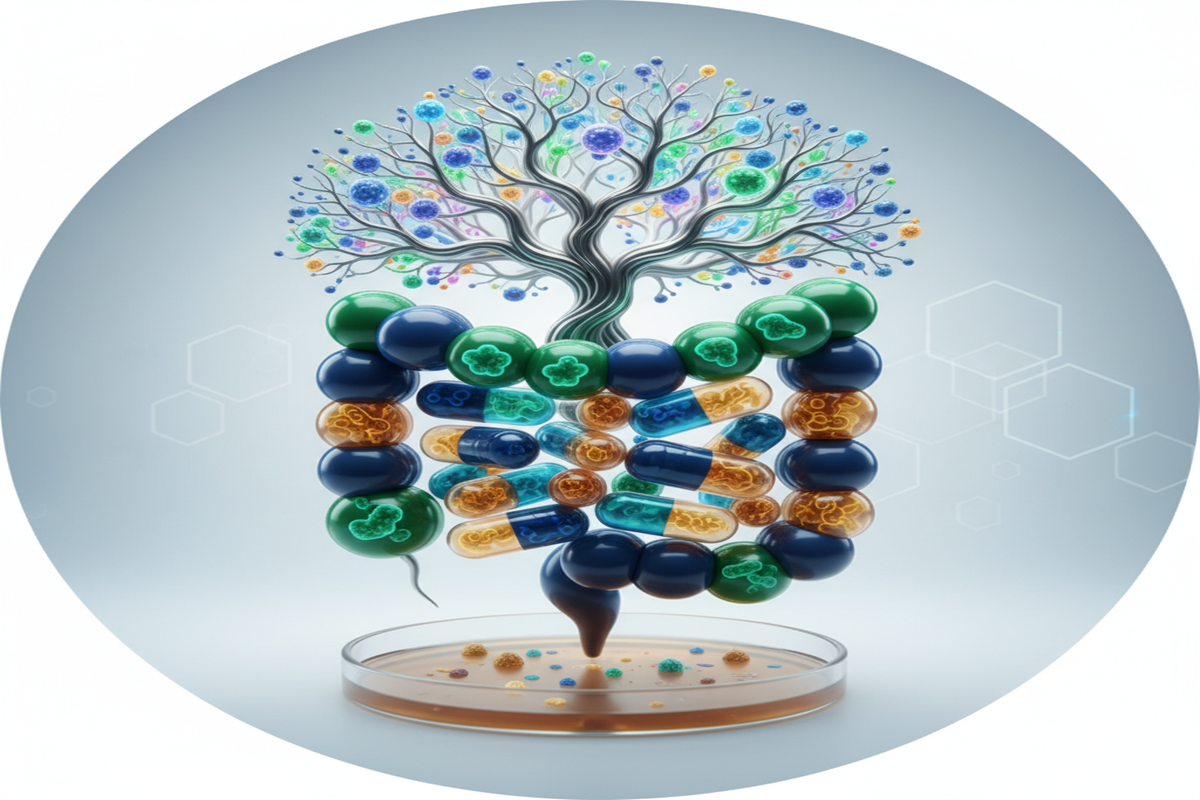
FMT doesn’t just add a few probiotic strains. It introduces an entire bacterial ecosystem, including keystone species that no capsule supplement can deliver. That’s the difference between planting one flower and replanting an entire forest. The scale and diversity of what’s transferred is the whole point.
Key Takeaway: FMT delivers a complete microbial ecosystem from a healthy, screened donor into a damaged gut — something no probiotic supplement can replicate at scale.
From Invasive Hospital Procedure to Poop Pills — How FMT Has Evolved
FMT started as a colonoscopy procedure performed only in clinical settings for life-threatening infections. Today, advances in processing have transformed it into freeze-dried, encapsulated capsules — a poop pill — that you swallow. This shift makes treatment far more accessible, less invasive, and easy to repeat over time without a hospital visit.
The earliest documented FMT dates back to 4th-century China, where physician Ge Hong described human fecal suspensions as a remedy for food poisoning. Modern clinical use took off in the 1950s. But it was the microbiome research boom of the 2010s that pushed FMT from obscure procedure to legitimate medicine.
In November 2022, the FDA approved Rebyota — the first microbiome-based therapeutic — marking a major regulatory milestone. More products are in clinical trials right now. The oral capsule format is accelerating adoption by making dosing repeatable without repeated clinical visits, lowering the barrier for anyone serious about gut optimization.
Key Takeaway: FMT has evolved from an invasive hospital procedure into an oral capsule protocol — lowering the barrier to entry and making it viable for repeated treatment cycles outside of clinical settings.
The Science Behind the Stack — What’s Actually Happening in Your Gut
When you take an FMT capsule, you introduce a full microbial ecosystem into your gut. Donor bacteria compete with harmful strains, fill ecological niches, produce short-chain fatty acids, and signal your immune system. It’s not just about adding bacteria — it’s about restoring biological order in a system that’s gone haywire.
Keystone Species: The Anchors of a Healthy Microbiome
Not all bacteria pull equal weight. Keystone species — like Faecalibacterium prausnitzii and Akkermansia muciniphila — anchor the entire microbial community. They produce butyrate, a short-chain fatty acid that fuels gut lining cells and keeps inflammation in check. Without these anchors, the ecosystem collapses.
Modern diets, antibiotics, and chronic stress wipe out keystone species fast. A single antibiotic course can reduce microbiome diversity by up to 25%, with some species never fully recovering (Dethlefsen & Relman, 2011). FMT reintroduces these lost anchors in a single, concentrated dose — something years of dietary changes struggle to achieve.
The Gut-Brain Axis: Your Mood Is Microbial
Here’s a number that should stop you in your tracks. Around 95% of your body’s serotonin is produced in the gut — not the brain (Yano et al., Cell, 2015). Your microbiome directly shapes that production. A damaged gut doesn’t just cause bloating. It erodes your mood, focus, and mental resilience.
FMT recipients frequently report improvements in anxiety and mental clarity — not just digestion. That’s the gut-brain axis in action. Fix the gut ecosystem, and you often shift the brain’s chemical environment with it.
Key Takeaway: FMT restores keystone bacterial species that produce butyrate and influence serotonin levels — giving it measurable downstream effects on immunity, inflammation, and mental performance.
The Three-Phase FMT Protocol
Most clinical FMT protocols follow three distinct phases: a gut clean-out to clear competing bacteria, a high-dose loading phase to introduce donor microbes, and a maintenance phase to support long-term colonization. Each phase is engineered to maximize microbial engraftment — meaning how well the new bacteria actually take hold and stick around.
Phase 1 — The Clean-Out
Before you introduce new bacteria, you need to clear space. This prep phase typically involves a short bowel prep or targeted dietary changes to reduce the existing microbial density. Think of it like clearing a building site before construction. Less competition means incoming donor bacteria have a real chance to take root.
Phase 2 — The Loading Dose
The loading phase delivers a concentrated burst of donor microbiota. In capsule protocols, this means taking multiple poop pills over a defined window — often a few days to a week. The goal is to flood the gut with diverse, healthy bacteria before the environment snaps back to its old dysbiotic patterns.
Phase 3 — Maintenance
The maintenance phase supports lasting colonization. This usually involves lower-dose capsules over weeks or months, paired with dietary upgrades — like increasing prebiotic fiber intake — to feed and stabilize the new microbial community. Skip this phase, and the engraftment window closes. The old patterns return. You’re back to square one.
Key Takeaway: A successful FMT isn’t a one-and-done event. The three-phase protocol — clean-out, loading, maintenance — is what separates short-term results from lasting microbiome transformation.
What Can a Fecal Microbiota Transplant Actually Fix?
The most proven application of fecal microbiota transplant is recurrent Clostridioides difficile (C. diff) infection. FMT achieves cure rates of 80–90% here — compared to just 30–50% with antibiotics alone (van Nood et al., New England Journal of Medicine, 2013). Beyond C. diff, the clinical frontier is expanding fast.
Conditions With Strong Clinical Support
- Recurrent C. difficile infection: The gold standard FMT use case with the deepest evidence base.
- Small Intestinal Bacterial Overgrowth (SIBO): FMT may help rebalance the microbial distribution between the small and large intestine.
- Leaky gut (intestinal permeability): Restoring keystone species supports repair of tight junctions in the gut lining, reducing systemic inflammation.
- Inflammatory Bowel Disease (IBD): Multiple trials show clinical remission in subsets of Crohn’s disease and ulcerative colitis patients.
Emerging and Biohacking Applications
- Food sensitivities: A more diverse microbiome appears to improve immune tolerance to food antigens — reducing overreactive responses.
- Mood and anxiety: Early studies link FMT to measurable reductions in anxiety and depressive symptoms via the gut-brain axis.
- Metabolic health: Some trials show improvements in insulin sensitivity following FMT from lean, metabolically healthy donors.
- Immune education: A richer microbiome teaches the immune system to distinguish threats from harmless inputs — a key factor in allergy and autoimmune risk.
Key Takeaway: FMT’s strongest evidence is in C. diff, but its clinical reach is expanding rapidly — covering SIBO, leaky gut, IBD, food sensitivities, and mood — making it a legitimate multi-system biohack.
Donor Screening — Not Just Anyone’s Microbiome Will Do
FMT donor selection is as rigorous as blood donation — arguably more so. Candidates are screened for over 100 pathogens, metabolic conditions, antibiotic history, diet quality, and lifestyle factors. Fewer than 5% of applicants typically qualify. The best donors — often called “super donors” — have exceptionally diverse, resilient microbiomes that consistently drive better outcomes in recipients.
What defines a super donor? High microbial species diversity, strong populations of keystone bacteria, no antibiotic use in the past six to twelve months, a high-fiber diet, and no underlying chronic disease. Some researchers believe super donor status is partly genetic — certain individuals simply maintain richer gut ecosystems than others, and that richness transfers meaningfully during FMT.
This is exactly why DIY FMT is a bad idea. It’s a real, disturbing corner of the biohacking community — and it bypasses every safety layer that makes FMT work. In 2019, the FDA issued a safety alert after immunocompromised patients developed serious, life-threatening infections following FMT with inadequately screened donor material. The risks of unscreened stool are not theoretical. Proper protocols exist for a reason. Use them.
Key Takeaway: Donor quality is everything in FMT. A super donor with exceptional microbial diversity drives meaningfully better outcomes — and rigorous screening is what separates safe, effective FMT from a dangerous gamble.
FAQ — Your FMT Questions Answered Directly
Is FMT safe for healthy adults?
For most healthy recipients using properly screened donor material and a supervised protocol, FMT is considered safe. Common side effects are mild — temporary bloating, gas, or shifts in stool frequency. Risk increases significantly with DIY approaches or unscreened material. Always use a licensed clinic or certified FMT provider.
Is FMT legal in the United States?
FMT occupies a regulated gray zone. The FDA has approved Rebyota for C. diff and permits FMT use at clinics under an Investigational New Drug (IND) exemption. Accessing it outside of approved channels is both legally risky and medically dangerous. The regulatory landscape is evolving, so verify current guidelines with a qualified clinician.
How many FMT treatments do you actually need?
It depends on your condition and baseline microbiome status. For C. diff, a single treatment often resolves the infection entirely. For chronic gut dysbiosis, leaky gut, or SIBO, a three-phase protocol spanning several weeks to months is typically far more effective. There’s no universal answer — your protocol should be built around your specific clinical picture.
Can FMT improve mood and cognitive performance?
Early evidence says yes. Because roughly 95% of serotonin is produced in the gut, restoring microbial balance can shift mood, reduce anxiety, and improve mental clarity. FMT is not a psychiatric treatment. But gut restoration appears to have real, measurable downstream effects on mental health — effects that no antidepressant directly addresses.
The Bottom Line — Should FMT Be in Your Health Stack?
If you’re serious about optimizing your performance from the ground up, the gut is where the stack starts. FMT isn’t accessible to everyone right now. It’s still evolving. But the science is real, the trajectory is clear, and the results that Jason Klop and others are seeing in clinical practice are hard to ignore.
For anyone dealing with persistent gut dysfunction — SIBO, leaky gut, chronic food sensitivities, or dysbiosis that years of probiotics haven’t touched — FMT represents a category of intervention that goes far deeper than anything on the supplement shelf. It doesn’t treat symptoms. It addresses the root ecosystem.
The three-phase protocol, combined with rigorous donor screening and targeted dietary support, is what makes the difference between a one-time experiment and a lasting microbiome reset. The poop pill isn’t glamorous. But in the world of biohacking, results beat optics every time.
Start by working with a qualified gut health clinician who understands the FMT landscape. Get a comprehensive microbiome test to establish your baseline. Then pay close attention to the research — this space is accelerating fast, and the next few years will almost certainly validate FMT for a much wider range of conditions than we can treat today.
Disclaimer: This content is for informational purposes only and does not constitute medical advice, diagnosis, or treatment. Always consult with a qualified healthcare professional before making any health-related decisions.
You might also enjoy: Lean and Mean: How to Burn Fat Without Destroying Your Body
You might also enjoy: The Hidden Health Risks of Artificial Turf You Need to Know About
You might also enjoy: Your Indoor Air Is Worse Than Outside: The Fix That Actually Works